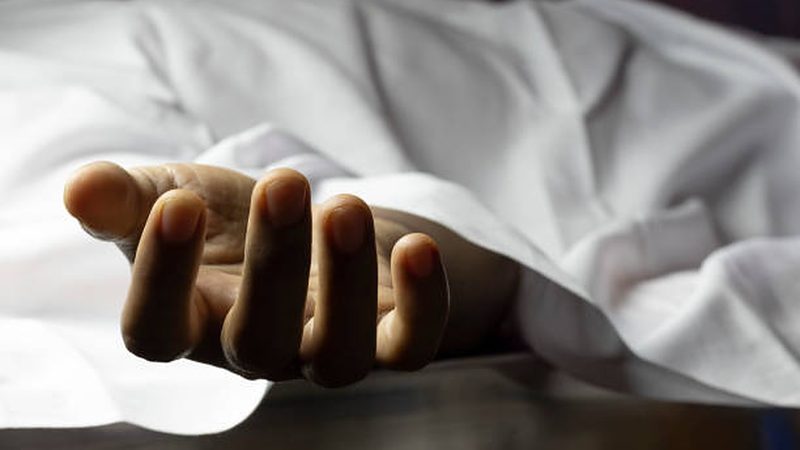
On Wednesday, a woman was shot dead by her ex-husband for choosing to file Khula. A woman named Amna Bibi was shot by Muhammad Naeem in Multan, Pakistan. She had been living at her parent’s home due to domestic disputes and her husband’s unemployment. He entered his in-laws home in broad daylight with a pistol, opened fire on Amna and also shot her mother on her back, critically wounding her. This incident was recorded in its entirety on a nearby CCTV camera. She had returned to her parents’ home, awaiting the decision to the Khula she had filed some time prior.
Khula Law Updates in 2026
In October 2020, a similar incident happened where a woman named Shehnaz Bibi approached the family court to file a khula case. Her husband killed her 2 days after the divorce was finalized. He shot her 6 times and she died on the spot. He appealed the murder case, but the court stayed firm in its decision to give him the death penalty. Retaliatory violence against a woman for exercising her right to divorce is now officially defined as an “attack on the Constitution” and an act of open rebellion against the law. So, legally Muhammad Naeem has committed a great crime against the state. Pakistan also updated its Khula laws to not require the husband’s consent in a woman’s decision to dissolve a marriage. It also broadened the definition of cruelty on the basis of which a woman can seek to file a Khula, including lack of compatibility, neglect, second marriage of husband, and the husband making the wife’s life miserable EVEN without physical abuse. Courts have expanded cruelty to emotional abuse, along with physical abuse which was pre-existing. But Khula is a concept that is difficult to accept or even comprehend in Pakistan, due to rarity of occurrence.
What is a Khula?
Khula is a framework of dissolution of marriage, which allows the woman to file for divorce in situations where a marriage is beyond reconciliation. Under this law, a wife can approach the Family Court to seek to dissolve the marriage when the situation is impossible to bear. It applies in a situation where the marriage becomes unbearable but the husband refuses to give Talaq.The legal logic is that the woman can only go to the court when the husband refuses to give Talaq, that is why it operates without the husband’s consent. The framework revolves around the refusal of the husband to give divorce. A woman’s right to seek Khula is explicitly protected under Articles 9, 14, and 25 of the Constitution of Pakistan.
Even in the case of concrete laws surrounding this matter, the culture of Pakistan is not built to accept this concept. If the law has provided the right of the woman to choose, why does the law matter when the culture does not accept the woman’s right to make any decision regarding herself? A legal right that culture refuses to recognize isn’t really a right at all.
According to consolidated human rights data and organizations like the Women’s Action Forum (WAF), over 7,500 women were murdered in Pakistan between 2021 and 2024. On average, it is estimated that between 1,000 to 1,500 women are victims of absolute femicide annually, though underreporting means the actual numbers are significantly higher.
The Sustainable Social Development Organization (SSDO) and White Ribbon Pakistan report that between 34% to 90% of ever-married women face some form of domestic, physical, or psychological abuse from their spouses. In Punjab alone, official data registered an average of 24 domestic violence cases every single day.
According to data from the Human Rights Commission of Pakistan (HRCP), domestic disputes are the single largest recorded driver of honor-related femicides. Legal watchdogs estimate that within these domestic disputes, rebellion against marital authority—primarily manifested through a woman leaving the house, demanding her dower, or filing for khula—drives an estimated 20% to 30% of these fatal retaliations.
Femicides masked as honor crimes accounted for at least 1,553 documented deaths over a recent three-year stretch, with hundreds of cases continuing to be recorded annually across Punjab, Sindh, and KP.
While traditional honor killings are often associated with a woman’s brothers or father, data analyzing targeted female homicides shows that husbands or ex-husbands are responsible for roughly 31% of all honor-related killings.
Women usually have no say in the occurrence of marriage itself, to assume that the culture accepts her decision in the dissolving of a marriage is an absolutely ridiculous assumption.
This is another form of honour killing. Why does a woman’s decision about a man so often end in her death in Pakistan?
Even in a situation where the law explicitly protects the woman’s wellbeing, where the woman has made a decision legal both in Pakistani, and Islamic law, she is killed by a man enraged at being left. It’s certainly the case that a decision made by a woman in Pakistan, whether it is about marriage or divorce, can result in her death.