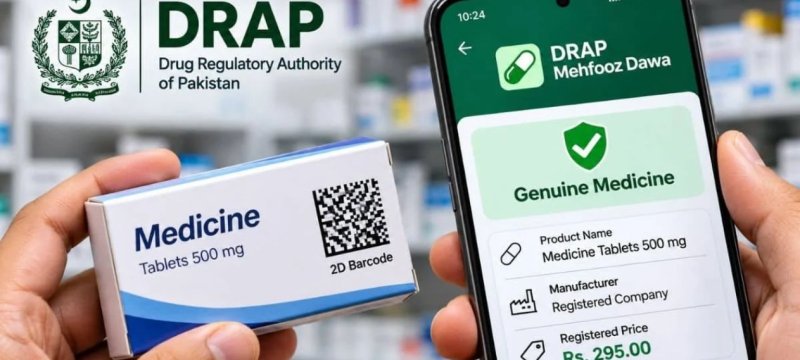
The Drug Regulatory Authority of Pakistan (DRAP) has urged consumers to use its Mehfooz Dawa app. The digital platform helps buyers verify medicines and check their registered prices before purchasing them.
The app uses a 2D barcode system to provide product information. Smartphone users can scan the barcode printed on medicine packaging. The system then displays details about the registered product and its approved price.
The initiative aims to address several problems in Pakistan’s pharmaceutical market. These include counterfeit medicines, overpricing and other illegal practices. It also gives consumers an easier way to check product authenticity.
More Than 90,000 Medicines Registered With DRAP
Ministry of National Health Services spokesperson Sajid Shah shared details about the registration system. He said around 800 pharmaceutical companies are registered with DRAP.
The regulator has also registered more than 90,000 medicines. Consumers can use the Mehfooz Dawa app to check whether purchased products match official registration records.
The barcode system also allows buyers to compare the displayed price with the registered price. This could help consumers identify possible overcharging at pharmacies.
Medicine Track and Trace System Becomes Operational
Pakistan’s centralised Medicine Track and Trace System became operational on October 9, 2026. The system covers medicines distributed across the country.
It is designed to improve monitoring throughout the pharmaceutical supply chain. Regulatory authorities can use it to track products during distribution.
The system could also help officials identify specific medicine batches when problems arise. This may support faster recalls following safety complaints or quality concerns.
How to Use the Mehfooz Dawa App
Consumers need a smartphone to access the digital verification facility. They can download and use the Mehfooz Dawa app to scan medicine packaging.
The process involves scanning the 2D barcode printed on the medicine pack. The app then provides information about the product and its registered price. Buyers can compare these details with the medicine they intend to purchase. This allows them to identify possible differences in product information or pricing.
Barcode System Faced Years of Delays
Pakistan first proposed introducing a medicine barcode system in 2015. The federal cabinet approved the initiative in 2017. However, administrative delays prevented its full implementation for several years.
Health Minister Mustafa Kamal later took notice of the prolonged delay. He directed the relevant authorities to move forward with the system. DRAP subsequently set October 1, 2026, as the implementation deadline. The barcode mechanism aims to address counterfeit and expired medicines. It also targets black marketing and other illegal activities.
DRAP Strengthens Action Against Fake Medicines
The digital verification facility comes as DRAP continues monitoring medicine quality across Pakistan. The regulator has issued several alerts about counterfeit, substandard and unregistered products.
In an alert issued on November 5, DRAP advised consumers to purchase therapeutic products from authorised outlets. It also urged buyers to check product authenticity and packaging conditions carefully. The Ministry of National Health Services has reaffirmed the government’s commitment to improving healthcare standards. Its efforts focus on ensuring access to safe, effective and quality medicines across the country.
In other news read more about Earning Rs120,000 a Month? You Could Be Among Pakistan’s Top 10% Earners
The Mehfooz Dawa app provides consumers with another tool for checking pharmaceutical products. Its wider use could improve transparency and help strengthen public confidence in Pakistan’s medicine supply system.