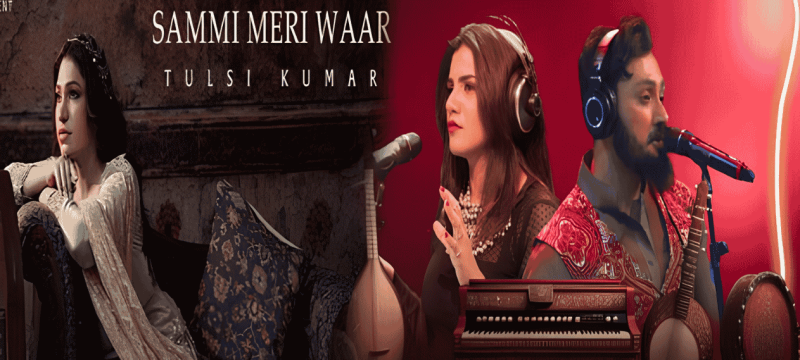
Indian singer Tulsi Kumar and music label T-Series have faced criticism over their latest version of the traditional Punjabi folk song Sammi Meri Waar.
The release has sparked discussions among Pakistani music fans. Many listeners have compared it with earlier Pakistani versions of the famous folk melody.
Particular attention has returned to the popular Coke Studio performance by Quratulain Balouch (QB) and Umair Jaswal. Some listeners believe the song’s Pakistani musical history deserves greater recognition.
T-Series released the official music video on November 24, 2026. The new version features Tulsi Kumar and offers another interpretation of the traditional composition.
However, the release quickly attracted criticism on social media. Much of the discussion focused on the song’s credits and its historical musical background.
Tulsi Kumar’s Sammi Meri Waar Credits Spark Debate
According to the official music video description, T-Series has listed the music and lyrics as “Traditional”.
Tulsi Kumar has received credit for additional lyrics. Meanwhile, Prasanna Suresh is credited for the music arrangement and production.
Although the traditional origins are acknowledged, some Pakistani listeners want more recognition for earlier performers. They argue that influential Pakistani renditions should also receive attention.
Critics believe these performances played an important role in introducing the folk song to wider audiences.
Gulshan Ara Syed’s Earlier Rendition Returns to Spotlight
The controversy has also renewed interest in legendary Pakistani singer Gulshan Ara Syed.
Her earlier rendition of Sammi Meri Waar has resurfaced across social media platforms. Journalist and analyst Umar R Qureshi also shared archival footage of her performance.
The footage reminded listeners of the song’s long musical history. It also highlighted the contribution of artists who performed the traditional melody in earlier years.
Many social media users believe these historical performances deserve recognition alongside newer versions.
Coke Studio Version by QB and Umair Jaswal Remains Popular
Another major focus of the discussion is the 2015 Coke Studio performance.
Quratulain Balouch and Umair Jaswal delivered a memorable interpretation of the traditional folk song. Their version combined the original melody with a contemporary musical arrangement.
The performance became one of the most recognised modern versions of Sammi Meri Waar.
It continues to hold a special place among Pakistani music fans. This popularity has encouraged listeners to compare their rendition with T-Series’ latest release.
Debate Goes Beyond Musical Comparisons
T-Series promoted its new version with the caption, “For every heart that has loved, waited and missed someone.”
The message presents the song as an emotional expression of love and separation. It connects the melody with people who miss someone special.
However, the promotional message has not ended questions about musical recognition.
The discussion also highlights the importance of preserving traditional music. Folk songs often pass through generations without having one clearly identified creator.
Acknowledging a composition as traditional is different from recognising artists behind influential recordings. Critics believe both aspects deserve attention.
The controversy has also developed a political dimension. Some Pakistani users have questioned India’s calls to boycott Pakistani entertainment.
They have mentioned projects such as Netflix’s Jo Bachay Hain Sang Samait Lo. These users have questioned the perceived double standards surrounding Pakistani entertainment and music.
For now, Tulsi Kumar’s version has renewed attention on a traditional Punjabi folk classic. The debate continues to highlight the importance of musical history and artistic recognition.
In other news read more about: Fiza Ali Faces Criticism Over Labour Day Show