


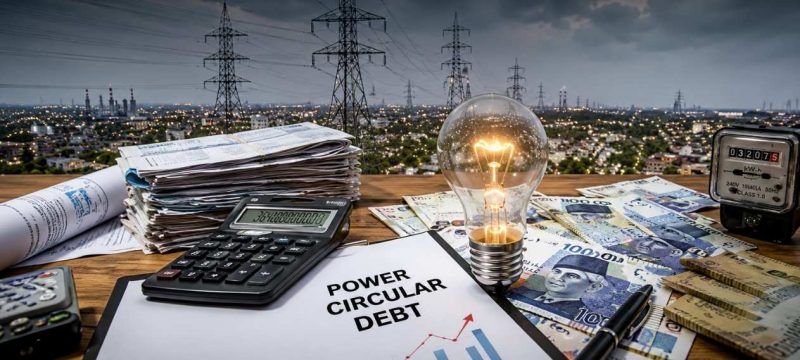
Pakistan’s Power sector circular debt increased by Rs. 364 billion during fiscal year 2025-26. The increase came despite significant government subsidies aimed at controlling the financial crisis.
According to the June 2026 circular debt report, debt flow rose sharply during the fiscal year. It increased by Rs. 19 billion, or 709%, compared with the previous year.
However, the Power Division has not yet officially published the one-page report on its website.
The latest figures highlight persistent challenges across Pakistan’s electricity sector. These include poor recoveries, distribution losses, delayed tariff adjustments and payment disputes.
The government provided around Rs. 302 billion in subsidies during the year. These funds were intended to limit further accumulation of circular debt.
Despite this support, the overall debt continued to increase.
DISCO Inefficiencies Add Rs. 262 Billion
Distribution companies remained a major contributor to the growing circular debt.
Inefficiencies at distribution companies added approximately Rs. 262 billion during FY2025-26. Lower electricity bill recoveries contributed another Rs. 64 billion.
The government has started the privatisation process for FESCO, GEPCO and IESCO. These companies are considered relatively profitable among Pakistan’s distribution companies.
However, privatising these companies may not immediately address losses elsewhere in the distribution network.
K-Electric Dispute Adds to Circular Debt
K-Electric’s non-payment contributed another Rs. 194 billion to the circular debt.
The amount is linked to a dispute involving delays in finalising the company’s multi-year tariff by NEPRA.
Delayed tariff adjustments contributed another Rs. 75 billion during the year. Interest charges added approximately Rs. 14 billion.
Meanwhile, the government paid Rs. 129 billion toward the principal amount of Power sector loans.
These payments helped prevent the circular debt flow from increasing further during the fiscal year.
IMF Targets Face Continued Pressure
Pakistan’s commitments with the International Monetary Fund also include targets for managing circular debt.
The country was allowed a circular debt flow of up to Rs. 400 billion. However, authorities were expected to reduce annual flow to zero.
Budgetary support and structural reforms were expected to help achieve this objective.
The latest figures show that several underlying problems remain unresolved. Weak recoveries and distribution inefficiencies continue to place pressure on the sector.
Delayed tariff decisions and payment disputes have also complicated government efforts to improve financial stability.
For consumers, the persistent Power sector debt problem can contribute to tariff adjustments and additional electricity charges.
Higher electricity costs are also encouraging households and businesses to consider alternative energy options. Rooftop solar has become one such option for consumers seeking to reduce grid electricity costs.
In other news read more about: Pakistan LPG Prices Surge to Rs. 450 Per Kg as Official Rates Ignored
The latest increase shows that improving recoveries and reducing distribution losses remain important challenges for Pakistan’s electricity sector.