


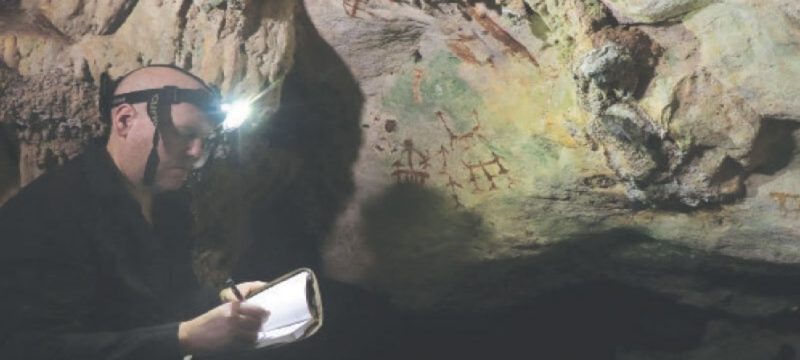
Archaeologists have discovered what may be the oldest known cave paintings in the world on Muna Island in Indonesia. The finding sheds new light on early human creativity and culture in Southeast Asia.
The discovery includes hand stencils found on limestone cave walls. Scientists estimate their age at up to 67,800 years. This makes them older than any previously known cave art.
The hand stencils appear in a tan color. Early humans likely created them by blowing pigment over hands pressed against the rock surface. Researchers say this technique shows planning and artistic intent.
The oldest stencil was found beneath newer paintings. These later images show a person riding a horse next to a chicken. This layering helped researchers understand the long history of art in the caves.
At first, experts struggled to confirm that the shapes were human hands. Closer study revealed clear fingertip patterns. Some fingertips were shaped into pointed forms on purpose.
Lead researcher Adhi said these details confirmed the markings were not random. They reflect deliberate artistic choices made by early humans on Muna Island.
Archaeological specialist Maxime Aubert explained that this hand style is unique. He said it matches a design found only in the Sulawesi region. This supports the idea of a local artistic tradition.
Another researcher, Adam Brumm, suggested the pointed fingertips had symbolic meaning. He said they may represent animal claws instead of human hands. This could show a strong cultural link between people and animals.
Scientists used advanced dating methods to determine the artwork’s age. They analyzed uranium in thin mineral layers that formed over the paintings. Laser tools measured uranium decay against stable thorium levels.
This method provided a reliable minimum age for the art. Experts say the paintings could be even older.
The caves on Muna Island were used many times over thousands of years. Some paintings were added more than 35,000 years after the earliest ones.
The discovery is over 15,000 years older than cave art found in nearby Sulawesi in 2024. Researchers believe this supports theories of early human migration through the region.
In other news read more about Japan Restarts World’s Largest Nuclear Power Plant
Experts say the findings prove early humans were skilled sailors and artists. The discovery adds strong evidence of ancient cultural life in Southeast Asia.