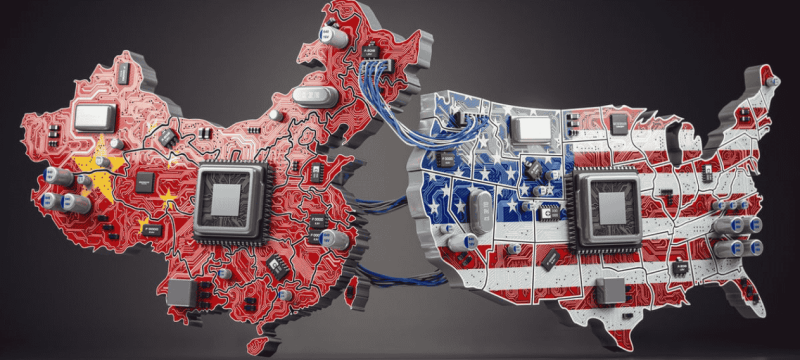
The United States has announced plans to impose new tariffs on China chip exports. The move follows a USTR investigation into Beijing’s semiconductor policies.
The investigation concluded that China’s targeting of semiconductors “for dominance is unreasonable and burdens or restricts US commerce,” the agency said. USTR said the current tariff rate of zero will rise on June 23, 2027, though the exact rate will be announced at least 30 days prior.
Beijing responded strongly, saying it “firmly opposes” the US action. Chinese officials accused Washington of using tariffs to “unreasonably suppress Chinese industries.” Foreign Ministry spokesman Lin Jian said the measures “disrupt the stability of the global supply chain, hinder the development of all countries’ semiconductor industries and harm others while hurting itself.” He urged the United States to correct its “erroneous practices” quickly.
The probe began in December 2024, during the final weeks of Joe Biden’s presidency, and continued under President Donald Trump, who has frequently used tariffs on steel, autos, and other goods. USTR’s “Section 301” investigation found that China employed “increasingly aggressive and sweeping non-market policies” to dominate semiconductors. This included “massive and persistent” state support for private companies and “wage-suppressing labor practices.”
US officials have not explained why the 18-month timeframe was set before raising tariffs. Analysts say the delay may allow time for negotiations or to minimize disruption to global markets.
The announcement is the latest in ongoing US-China trade tensions. While the two countries reached a broad truce earlier this year, the semiconductor sector remains a sensitive area. China chip production is central to Beijing’s industrial strategy, making it a potential flashpoint for further trade disputes.
The new tariffs aim to protect US interests in the semiconductor sector while signaling that aggressive industrial policies may face international consequences. How Beijing responds will be closely watched by global investors and tech companies.
In other news read more about: U.S. Blocks Nvidia From Selling New AI Chip To China