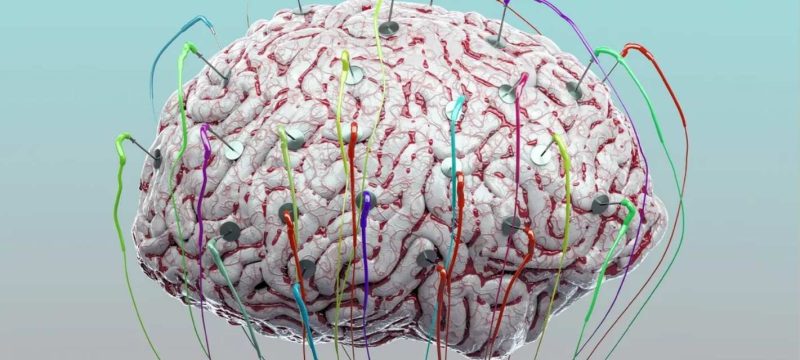
Scientists in Germany have reported a major scientific breakthrough involving the Human Brain. Researchers say they were able to restore activity in previously frozen brain tissue using a special preservation technique.
The discovery was described in a study published in the journal Proceedings of the National Academy of Sciences (PNAS). The research was conducted by scientists from the University of Erlangen-Nuremberg in Germany.
According to the researchers, the key challenge in preserving the Human Brain has always been the damage caused by traditional freezing. Standard freezing methods create ice crystals inside brain tissue. These crystals expand and damage delicate cell structures.
When the cells are damaged, the neural connections responsible for memory and thought are destroyed. This is why preserving the Human Brain has been extremely difficult in the past.
To solve this problem, scientists used a technique called vitrification. This process avoids the formation of ice crystals inside the tissue.
Instead of freezing in the usual way, the tissue is converted into a glass-like state. In this state, molecular movement stops, but the structure of the tissue remains preserved.
During the experiment, scientists tested the method on mouse brain tissue. They used thin slices of the hippocampus, which is an important part of the brain responsible for learning and memory.
The samples were cooled to extremely low temperatures of minus 196 degrees Celsius using liquid nitrogen. Some samples were stored for just ten minutes, while others remained frozen for up to one week.
After the tissue was carefully warmed again, scientists observed remarkable results. Several important neural functions returned in the preserved tissue.
Researchers reported the return of neuronal firing, cell metabolism, and brain plasticity. These processes are essential for normal brain activity and communication between cells.
The results suggest that the structure of the Human Brain may be preserved more effectively than previously thought. Scientists say this breakthrough could have important medical applications.
One possible benefit is the ability to protect brain tissue after severe injury. Doctors could potentially pause damage by placing brain tissue in a preserved state.
This approach might also help during complicated surgeries or serious neurological treatments. Preserving the Human Brain for short periods could give doctors more time to treat patients.
Another potential application involves organ transplantation. The new technique could allow complex organs, including brain tissue, to be preserved longer before transplantation.
Experts say the discovery represents an important step in cryobiology research. Mrityunjay Kothari, a cryobiology specialist, told Nature that developments like this bring science closer to ideas once considered science fiction.
In other news read more about: Scientists Successfully Grow Chickpeas in Simulated Moon Soil
Although more research is needed, scientists believe the study offers new hope for future medical treatments involving the Human Brain.