

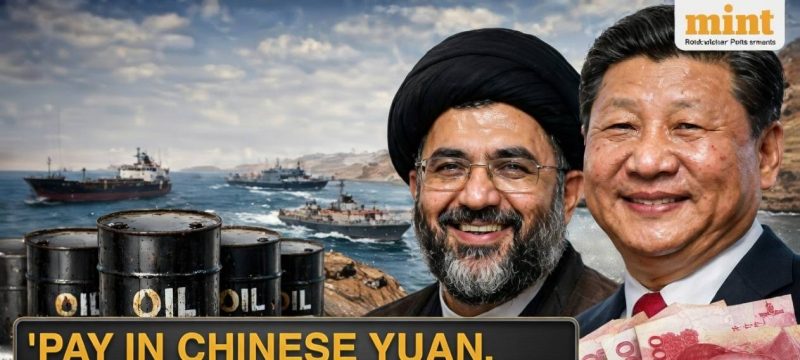
Iran is reportedly considering a new policy involving ships passing through the Strait of Hormuz, one of the world’s most important oil routes. According to emerging reports, Tehran may allow oil tankers to pass through Hormuz only if cargo payments are made in Chinese yuan instead of the US dollar.
The Strait of Hormuz is a narrow waterway located between Iran and Oman. It connects the Persian Gulf to the Gulf of Oman and the Arabian Sea. A large portion of the world’s oil shipments travel through this route every day.
Because of its location, Hormuz plays a crucial role in global energy trade. Many oil-exporting countries in the Gulf rely on Hormuz to transport crude oil to international markets. Any policy change affecting this route could influence global energy supply chains.
Reports suggest that Iran is studying the possibility of shifting payments from the US dollar to the Chinese yuan. Such a move could affect how oil cargoes passing through Hormuz are traded and settled.
Analysts say the proposal may be linked to broader economic and political tensions in the region. Iran has faced several international sanctions over the past years. These restrictions have affected the country’s financial system and international trade.
By encouraging payments in yuan, Iran may seek to reduce reliance on the US dollar in energy transactions. China is one of the world’s largest importers of oil and has strong economic ties with several Middle Eastern countries.
Energy experts believe any decision related to Hormuz would attract global attention. Nearly one-fifth of the world’s oil consumption moves through the strait. Even small disruptions or policy changes could affect oil prices and shipping operations.
Shipping companies and international traders closely monitor developments around Hormuz. The waterway has long been considered a strategic chokepoint in global maritime trade.
So far, Iranian authorities have not officially confirmed the reported proposal. Officials have also not provided detailed information about how such a system would be implemented.
However, the discussion itself highlights the growing importance of Hormuz in global geopolitics and energy security. Governments, oil companies, and financial markets continue to watch the situation carefully.
In other news read more about: North Korea Suddenly Fires 10 Ballistic Missiles as US–South Korea Drills Begin
Experts say any change to trade practices around Hormuz could reshape payment systems used in the global oil market. For now, international observers remain focused on whether Iran will move forward with the reported plan.