


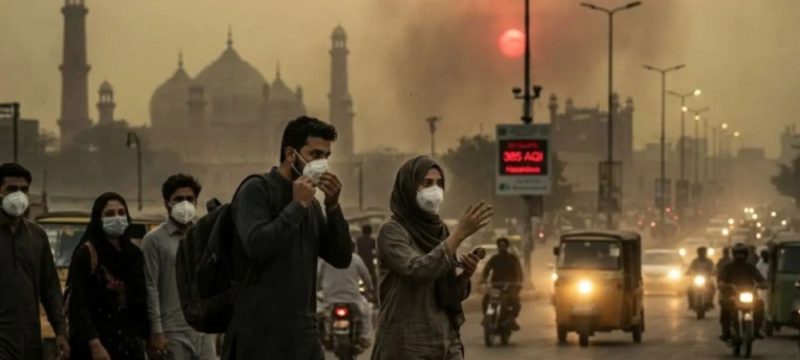
ISLAMABAD – Pakistan has been ranked the Most Polluted country in the world in 2025, according to the Pakistan Economic Survey 2025-26. The survey cited findings from the IQAir World Air Quality Report and highlighted the growing environmental and health challenges facing the country.
The report revealed that Pakistan recorded a population-weighted annual average PM2.5 concentration of 67.3 micrograms per cubic meter in 2025. This level was around 13 times higher than the air quality guideline recommended by the World Health Organization (WHO).
According to the survey, Pakistan earned the title of the Most Polluted country due to consistently high levels of harmful airborne particles. The report also noted that Pakistan was home to four of the ten most polluted cities in the world during the year.
Faisalabad recorded the highest pollution level among Pakistani cities. The city reported a PM2.5 concentration of 98.8 micrograms per cubic meter. Other cities that appeared in the global top ten list included Rahim Yar Khan, Lahore, and Sukkur.
The survey showed that air pollution is not limited to a few locations. A total of 13 cities across Pakistan recorded PM2.5 levels above 50 micrograms per cubic meter. These figures indicate the widespread nature of the country’s pollution problem.
Several factors were identified as major contributors to poor air quality. Industrial emissions, vehicle exhaust, brick kilns, and construction activities were listed among the leading sources. Seasonal events also worsened conditions. Dust storms during April and May increased pollution levels in many regions. Karachi experienced a significant rise in pollution during November compared to the previous year.
The health impact remains serious. The survey estimated that air pollution causes nearly 22,000 deaths annually in Pakistan. It also affects ecosystems and places additional pressure on public health systems.
Authorities have introduced measures to address the issue. More than 150,000 inspections were carried out in Punjab. Fines exceeding Rs687 million were imposed on violators. Fog cannons were used in Lahore, while anti-smog campaigns targeted industrial pollution sources.
The government also implemented reforms in the brick kiln sector. Full compliance with zig-zag technology was reportedly achieved in motorway zones. Anti-stubble burning efforts included drones and thousands of super seeders. Thermal night-vision drones were also deployed to improve monitoring.
In other news read more about Pakistan Records Second-Hottest Year in 65 Years as Rising Temperatures Raise Climate Concerns
Despite these initiatives, Pakistan remains the Most Polluted nation globally. The survey warned that air pollution continues to be a major challenge with no immediate solution in sight. It also noted that Central and South Asia remained the world’s most polluted region in 2025.