


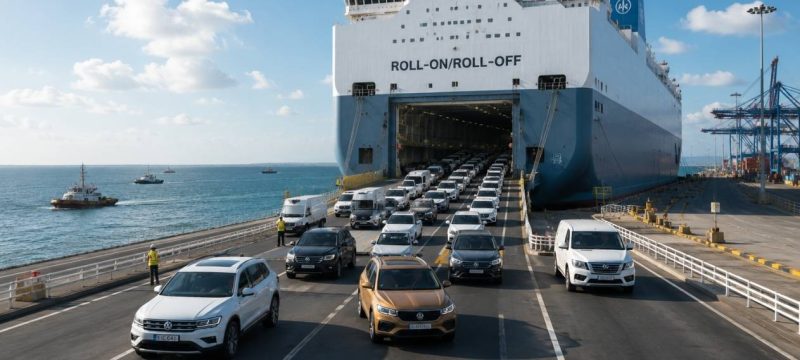
Pakistan has achieved a major milestone in its maritime industry with the arrival of its first RoRo Vessel, marking a significant step toward modernizing vehicle imports and strengthening the country’s logistics sector. The vessel, M.V. Grande Shanghai, arrived at Karachi carrying more than 2,000 electric vehicles (EVs), introducing a faster and more efficient way to transport automobiles into Pakistan.
The arrival of the RoRo Vessel is expected to improve the country’s port operations while supporting Pakistan’s long-term goals for trade expansion and cleaner transportation.
Unlike traditional cargo ships, Roll-on/Roll-off vessels are specially designed to transport wheeled cargo. Vehicles can be driven directly onto and off the ship using built-in ramps instead of being lifted by cranes. This process speeds up unloading, reduces handling risks, lowers insurance costs, and improves overall operational efficiency.
Experts believe this modern shipping method can significantly reduce logistics expenses for vehicle importers. Over time, these savings may also benefit consumers by lowering the overall cost of imported vehicles.
The shipment arrives at an important time as Pakistan continues to encourage the adoption of electric vehicles. The government has introduced several policies to support clean transportation, including reduced import duties, lower Federal Excise Duty (FED) on affordable EVs, and incentives for electric bikes and rickshaws.
Pakistan also aims for electric vehicles to account for 30 percent of all new vehicle sales by 2030. The arrival of thousands of EVs through the first RoRo Vessel supports this national objective and reflects the country’s growing focus on sustainable mobility.
The government’s strategy extends beyond vehicle imports. Authorities are also promoting local EV assembly, expanding charging infrastructure, and encouraging battery manufacturing. International automotive companies, including BYD and Geely, are preparing to increase their investments in Pakistan.
In addition, Pakistan’s first lithium-ion battery manufacturing facility is expected to begin operations soon. These developments could help reduce fuel imports, lower carbon emissions, and strengthen the domestic electric vehicle industry.
The successful handling of the RoRo Vessel also demonstrates improvements in Pakistan’s maritime capabilities. Faster cargo handling and shorter vessel turnaround times can make Karachi Port and Port Qasim more attractive to international shipping companies.
Officials believe stronger port operations will improve Pakistan’s position as a regional trade and logistics hub. Recent upgrades in LNG handling and other maritime services further highlight the country’s efforts to modernize its port infrastructure.
However, experts note that one successful shipment alone will not solve every challenge. Pakistan still needs to improve road and railway connections, expand EV charging stations, and ensure a stable electricity supply to fully support large-scale electric vehicle adoption.
Future investments are already planned to strengthen the maritime sector. These include deeper navigation channels, additional port terminals, Gwadar bunkering facilities, waterfront development projects, and the expansion of the Pakistan National Shipping Corporation (PNSC) fleet.
In other news read more about: Petrol and Diesel Prices in Pakistan May Increase by Up to Rs40 Per Litre Amid Global Oil Crisis
Industry observers believe regular RoRo Vessel services could transform Pakistan’s vehicle import system over the coming years. With continued investment in ports, logistics, and electric mobility, the country is taking important steps toward building a more efficient, competitive, and environmentally friendly transportation network.