


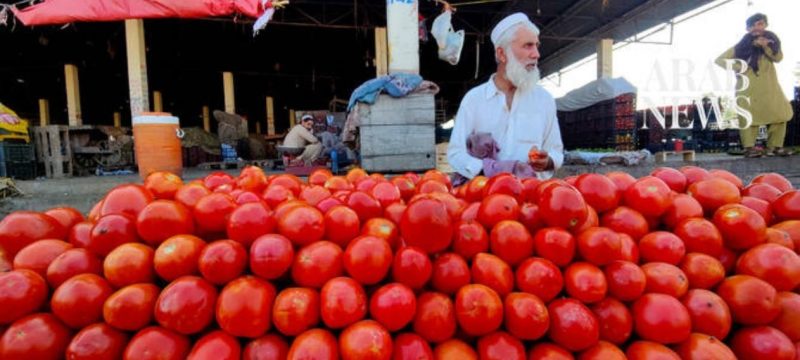
ISLAMABAD: Tomato Prices have surged to record levels across Lahore, Karachi, and several other major cities, with retail rates reaching as high as Rs. 500 per kilogram. Consumers continue to face rising costs despite limited imports from Iran aimed at easing the shortage.
According to market reports, retailers are selling both Iranian and Balochistan tomatoes for Rs. 450 to Rs. 500 per kilogram. Smaller and unripe tomatoes are also available, but they still cost around Rs. 400 per kilogram. For many shoppers, buying just 250 grams now costs between Rs. 110 and Rs. 125.
The sharp rise in Tomato Prices has reduced consumer purchasing. Traders say many families are now buying only a few tomatoes because of the high cost. A budget of Rs. 50 to Rs. 60 now buys only two or three small tomatoes, making the vegetable difficult to afford for many households.
The price increase has continued over the past few months. In April, tomatoes were commonly sold for Rs. 80 to Rs. 100 per kilogram. During the third week of June, prices increased to between Rs. 120 and Rs. 160 per kilogram. Earlier this month, rates crossed Rs. 300 before climbing further to the current levels.
Market experts say the shortage of supply is the main reason behind the continued increase. Although imported tomatoes from Iran have reached local markets, the quantity remains too small to stabilize prices.
Traders estimate that only around 10 containers of Iranian tomatoes enter the country each day. They believe this volume is far below Pakistan’s daily demand. As a result, imports have not significantly reduced Tomato Prices.
Importers are also facing quality concerns. According to traders, nearly 30 percent of imported tomatoes are damaged before reaching Karachi. The imported produce also softens quickly and has a different taste compared to locally grown tomatoes from Sindh and Balochistan.
Because of these quality issues, many retailers are reluctant to purchase large quantities of imported tomatoes. They continue to depend mainly on supplies from Balochistan. However, traders say the province’s production is not enough to meet nationwide demand.
Some relief may arrive later this year. Tomato cultivation has already started in Sindh, and harvesting is expected to begin by the middle of September. Fresh supplies from the province could help improve market availability and reduce prices.
The previous tomato crop in Sindh ended in April. Meanwhile, crops from Punjab and Khyber Pakhtunkhwa were mostly consumed within their respective provinces during May and June. This left fewer tomatoes available for markets in other parts of Pakistan.
The Pakistan Bureau of Statistics (PBS) has also reported a significant decline in vegetable exports during FY2026. Pakistan exported 594,104 tonnes of vegetables worth $163 million during the fiscal year. In comparison, exports stood at 1.448 million tonnes worth $367 million in FY2025.
In other news read more about Inflation in Pakistan Hits 23-Month High, Records Sharp Rise in May 2026
The figures highlight broader challenges facing Pakistan’s agriculture sector, including lower production and supply constraints. Until new local crops reach markets, Tomato Prices are expected to remain under pressure, affecting both consumers and retailers across the country.