


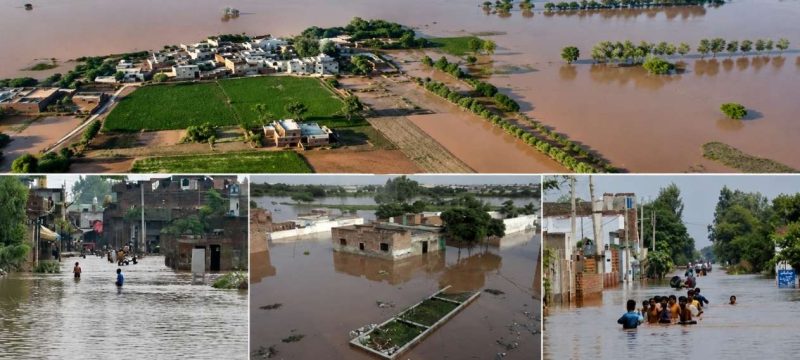
Heavy rainfall and rising water levels in the Chenab and Ravi rivers have caused widespread Flooding in several parts of Punjab. The rising water has damaged riverbanks, protective embankments, farmland, and residential areas, creating serious challenges for local communities.
One of the worst-affected areas is Kot Bela near Alipur Chattha, where floodwaters from the Chenab River have caused significant destruction. Fast-moving water has eroded large sections of the riverbank, placing dozens of houses at risk of collapse. Residents fear that further increases in water levels could worsen the situation.
The ongoing Flooding has also caused major losses to the agricultural sector. Thousands of acres of farmland have been washed away, while standing crops remain submerged under several feet of water. Farmers say the damage has affected their livelihoods and may result in severe financial losses during the current season.
Many residents said they were still recovering from last year’s floods when the latest disaster struck. They appealed to the Punjab government to take immediate action by strengthening river protection measures and launching relief operations for affected families.
Meanwhile, the Punjab Irrigation Department continues to monitor water levels along the Ravi River. According to officials, the inflow at Head Sidhani near Abdul Hakeem has reached 53,530 cusecs, while the recorded outflow stands at 38,230 cusecs. Authorities are closely observing the situation to reduce the risk of further flooding.
To support displaced residents, the local administration has established several flood relief camps in vulnerable areas. Camps have been set up in Mill Fatehiana, Kot Pathana, Adda Kalyara, Mauza Tara, Haveli Mai Safuran, Kot Karam Shah, and Dedhi. These centers are providing temporary shelter and assistance to families affected by the rising waters.
Floodwaters have also entered several agricultural villages, including Mill Fatehiana, Khan Da Chak, Jhlar Sagla, Shahbal Shah, Basti Peepal Wala, and Mauza Darsana. Crops in these areas have been submerged, raising concerns about food production and economic losses for farming communities.
The Sub-Divisional Officer (SDO) of the Irrigation Department has advised people living near riverbanks to move to safer locations as a precaution. Officials warned that water levels may continue to rise depending on weather conditions and river inflows.
Emergency teams remain on alert to respond to changing conditions. Authorities are monitoring embankments, drainage systems, and vulnerable villages to reduce the impact of Flooding and provide timely assistance where needed.
Experts say continuous rainfall and increasing river flows can quickly change flood conditions. Residents have been urged to follow official advisories, avoid entering floodwaters, and cooperate with emergency services during evacuation efforts.
In other news read more about: Pakistan Dams Reach 58% Capacity as Monsoon Flood Risks Increase
The latest Flooding highlights the ongoing risks faced by river communities during the monsoon season. Government agencies continue to assess the damage while relief efforts remain underway to protect lives, support affected families, and minimize further losses across Punjab.