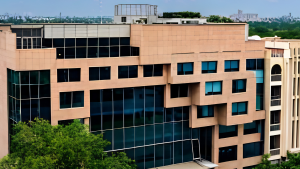


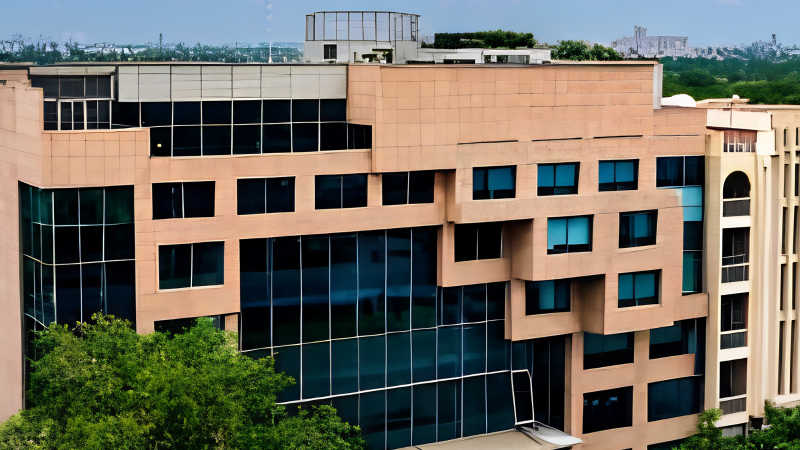
The Capital Development Authority sealed eight buildings in Islamabad this week. State Life Building. Crown Plaza. Envoy Continental Hotel. Beverly Centre. The Shaheed-e-Millat Secretariat. The TDAP Building. NIC Building. Khudadad Heights Plaza. All shut down, almost overnight, for fire safety violations that had reportedly been flagged by administrative inspections on record for months, sometimes years.
The timing tells you everything you need to know about how this city is governed.
The Fire That Revealed the Problem
On the morning of August 26, 2026, a spark inside the nursery of the Mother and Child Health ward at Pakistan Institute of Medical Sciences (PIMS) ignited within seconds. According to a preliminary hospital report, the blaze was fed by oxygen points fitted at each incubator. Sixteen infants were in that ward. One survived.
Fourteen newborns did not.
Eyewitness Abdul Ghafoor described trying to reach the nursery through thick black smoke. He told reporters that patients were trapped inside and that bystanders broke windows trying to pull people out. Ali Abbas, whose sister was a patient in the ward, said the nursery was full of smoke within moments of the short circuit. Arif Rana had been sleeping on the hospital lawn when his phone rang, a family member on the other end, screaming that fire had broken out where his newborn niece lay.
Among the dead were the twin daughters of Bahadur Khan, a vegetable seller who had gone home to rest while his wife recovered in the ICU. He learned his daughters were gone before she did.
This was not a freak accident in some unregulated back-alley clinic. This was Islamabad’s largest public hospital, the facility meant to represent the state’s baseline commitment to its citizens’ survival. And even there, the “safest place in the hospital,” as it was later described, turned into what one report bluntly called a deathtrap.
The Pattern Everyone Was Aware Of
What makes this harder to stomach is that PIMS itself had a fire less than two months earlier, at the nursing hostel reception on July 6. And PIMS is not even the first hospital nursery in Pakistan to burn. In June 2024, a fire tore through the paediatric ward of Sahiwal Teaching Hospital in Punjab, killing eleven babies. The mechanism was strikingly similar: electrical fault, ward full of vulnerable infants, no functioning safeguard fast enough to stop it.
Two hospitals. Two years apart. Two nurseries. Dozens of infants dead in fires that, on paper, should never have reached them.
That is not bad luck. That is a system that documents its own failures and then does nothing with the documentation.
Sealing Buildings Is Not the Same as Preventing Fires
To be fair to the CDA, sealing eight buildings is not nothing. Officials say the properties were already flagged during inspections by the Fire and Emergency Services Directorate and given time to fix the problems before being shut down. Chairman Sohail Ashraf has called for a “zero tolerance” approach going forward.
But zero tolerance, starting the week after fourteen babies were buried, is not zero tolerance. It is triage. The violations at these buildings, missing extinguishers, blocked emergency exits, inadequate evacuation routes, were not discovered this week. They were flagged earlier and left unresolved, according to the CDA’s own account of its notices. The mechanism that should have forced compliance months ago only found its teeth after a tragedy forced the government’s hand.
And the accountability on offer since has been oddly small. Three hospitals, including PIMS itself, were fined Rs500,000 each for their own violations. Half a million rupees, for an institution where oxygen-fed incubators sat one spark away from becoming what they became. It is difficult to look at that number next to fourteen coffins and call it proportionate.
What Citizens Are Owed
Islamabad residents walk into these buildings every day. They check into Crown Plaza and Envoy Continental without knowing whether the extinguishers on their floor even work. They drop off pension paperwork at State Life Building without wondering if the exits are blocked, because why would they. Fire safety is supposed to be invisible precisely because it is being handled. That is the deal citizens make with the institutions that regulate their built environment.
That deal was broken long before this month. It was broken every time an inspection flagged a violation and nobody followed up. It was broken every time a notice was issued and treated as paperwork rather than a warning.
Sealing eight buildings after the fact is a correction, not a policy. Real fire safety in this city will not be measured by how fast CDA moves after the next tragedy. It will be measured by whether the inspection reports sitting in some office right now, the ones nobody is currently panicking about, actually get acted on before they need to.
Islamabad does not have a shortage of inspections. It has a shortage of consequences that arrive on time.