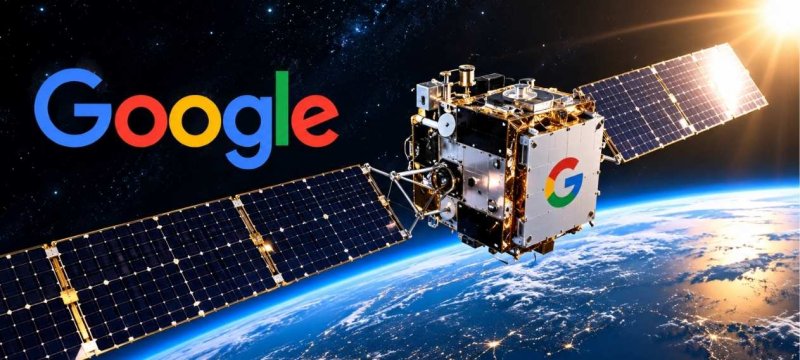
Google has launched a new satellite to test whether artificial intelligence computing can operate effectively in space.
The refrigerator-sized spacecraft carries four of Google’s Tensor Processing Units, known as TPUs.
The experiment is part of Project Suncatcher. It explores the possibility of creating AI computing infrastructure beyond Earth.
The current Satellite Mission will examine how AI hardware performs under challenging conditions in orbit.
Google Runs Gemma AI Model in Space
Google plans to run a version of its Gemma AI model aboard the satellite.
The AI system will operate for around 15 minutes during each session. Heat limitations prevent longer periods of continuous operation.
The company will study how its TPUs respond to radiation and extreme temperatures.
Researchers will also examine whether the chips can withstand the physical stress caused during launch.
The prototype was developed with satellite company Planet. It was sent into orbit aboard a SpaceX rocket.
The Satellite Mission is expected to continue operating for approximately one year.
Google Envisions AI Data Centers in Orbit
Project Suncatcher has a much larger long-term objective.
Google wants to explore clusters of interconnected satellites that could function like AI data centers in space.
Future satellites could carry dozens of TPUs. Solar energy could provide power for their computing systems.
Google also wants satellites to communicate using laser-based connections.
These links could allow satellites to exchange large amounts of information with each other and Earth.
The company plans to launch two additional satellites next year to test these connections.
Cooling AI Chips Remains a Major Challenge
Managing heat is among the biggest technical problems facing orbital AI computing.
Traditional air and water cooling systems used on Earth are unsuitable for the space environment.
Google is therefore experimenting with specialized pipes and radiators to remove heat from computing hardware.
Maintenance presents another challenge. Repairing damaged equipment in orbit would be far harder than fixing terrestrial data centers.
Launch expenses also remain significant.
Google does not expect space-based data centers to become cheaper than Earth-based facilities within five years.
Other Companies Explore Space-Based AI
Google is not alone in exploring orbital computing.
Starcloud previously sent an Nvidia H100 chip into space for testing.
SpaceX has also discussed plans involving orbital AI computing satellites, potentially beginning deployments as early as 2028.
However, significant technical and financial challenges remain before large-scale orbital computing becomes practical.
Google describes Project Suncatcher as a long-term moonshot project.
In other news read more about: Google Upgrades Gemini Omni With 4K Video and Longer Scenes
The current Satellite Mission is therefore an experimental step rather than an immediate replacement for traditional data centers.