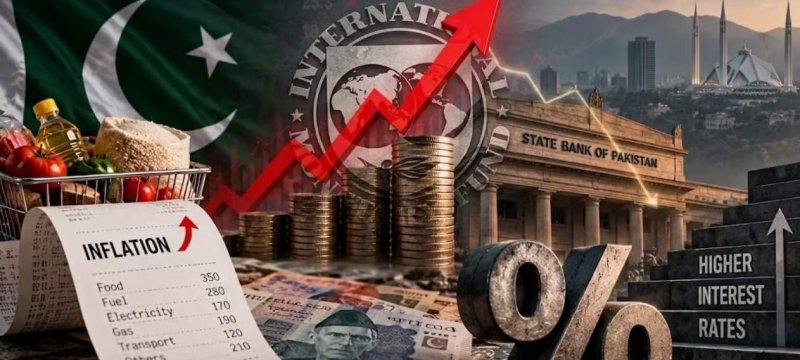
Pakistan could face renewed inflationary pressure in 2027, according to the International Monetary Fund (IMF). The IMF expects the country’s inflation rate to rise to 9.9% next year. The forecast also points to slightly slower economic growth, adding uncertainty to Pakistan’s economic outlook.
According to the IMF’s October 2026 World Economic Outlook (WEO), inflation is projected to increase from 7.1% in 2026 to 9.9% in 2027. This represents a rise of 2.8 percentage points within one year. The projected rate would also mark a significant increase from the 4.5% recorded in 2025.
The figures suggest that inflation could accelerate considerably over the two-year period. If the projections materialise, Pakistan’s inflation rate would rise by 5.4 percentage points between 2025 and 2027. This outlook comes amid concerns about fuel and food prices and their effects on household spending.
Higher inflation could increase pressure on families already managing everyday expenses. Businesses may also face rising operating costs, potentially affecting prices across different sectors. However, the IMF’s forecast does not specify which factors will drive the expected increase in inflation.
IMF’s Pakistan Economic Forecasts
The IMF’s projections also cover economic growth, unemployment and the current account balance. Pakistan’s GDP growth is expected to reach 3.6% in 2026, compared with 3.2% in 2025. However, the growth rate is projected to ease slightly to 3.5% in 2027.
The forecast indicates that Pakistan’s economy would continue expanding despite the anticipated slowdown. Nevertheless, the combination of rising inflation and moderating growth could create additional economic challenges. Policymakers may face pressure to address price increases while supporting economic activity.
The IMF also expects Pakistan’s unemployment rate to decline over the forecast period. It is projected to fall from 7.1% in 2025 to 6.9% in 2026. The rate could decrease further to 6.5% in 2027.
Meanwhile, Pakistan’s current account balance is projected to shift from a surplus of 0.5% of GDP in 2025 to a deficit of 1.0% in 2027. The figures indicate a potential deterioration in the country’s external balance.
Overall, the IMF’s October 2026 outlook presents a mixed picture for Pakistan’s economy. Economic growth is expected to continue, and unemployment is projected to decline. However, the anticipated increase in inflation could put additional pressure on household budgets and business activity.
In other news read more about Rana Sanaullah Hints KP Emergency Could Continue Until 2029 Elections
These figures are projections rather than confirmed outcomes. Pakistan’s actual economic performance in 2027 will depend on how conditions develop over the coming months.