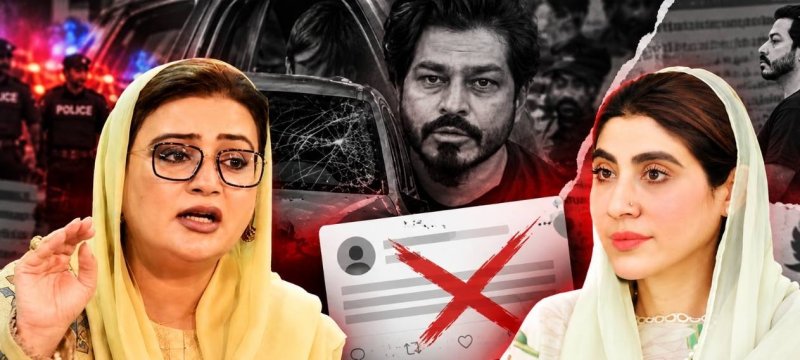
LAHORE, Pakistan: Punjab Information Minister Azma Bokhari has criticised Pakistan Muslim League-Nawaz (PML-N) lawmaker Hina Parvez Butt over a deleted social media post that described the killing of a murder suspect in a police encounter as immediate justice.
The controversy followed the death of Tauqeer Nazir, who was accused of killing a teenage boy in Multan. Police later reported that Nazir had escaped custody before being killed in an alleged encounter near Bahawalpur.
Butt’s post on X (formerly Twitter) praised the provincial government’s response, prompting criticism from journalists, lawyers and social media users who questioned whether a suspect’s death outside the judicial process could be considered justice.
Speaking on a television programme hosted by journalist Shahzeb Khanzada, Bokhari said Butt’s remarks had created embarrassment for both the lawmaker and the Punjab government.
The discussion also addressed allegations surrounding the Punjab Crime Control Department (CCD), the circumstances of Nazir’s death and the government’s position on police encounters.
Bokhari distanced the provincial government from Butt’s remarks, questioning the lawmaker’s judgment and suggesting that her social media statements had created unnecessary difficulties for the government.
Butt had shared a report about Nazir’s death and described the incident as an example of swift justice under Chief Minister Maryam Nawaz’s administration.
The post was subsequently deleted after attracting criticism.
The debate centred on whether a police encounter involving a suspect accused of a serious crime should be celebrated as justice when the allegations have not been tested through a completed criminal trial.
Bokhari said the chief minister had not directed police to kill suspects during encounters. She also defended the government’s position that criminal cases should be handled through lawful procedures.
The incident has renewed public discussion about the distinction between police action against suspected criminals and punishment imposed by a court.
Tauqeer Nazir was accused of running over a teenage boy, identified in media reports as Waseem Abbas, in Multan.
According to the police account reported by local media, Nazir was arrested in connection with the case but later escaped from custody.
Police subsequently reported that officers encountered two motorcycle riders near Bahawalpur’s Northern Bypass while attempting to stop them. An exchange of gunfire reportedly followed, leaving Nazir dead, while the other individuals escaped.
The circumstances surrounding his death have prompted questions about how he escaped custody and whether the encounter requires independent investigation.
The original case involving the teenager’s death also attracted public attention after reports and CCTV footage circulated on social media.
Bokhari discussed the allegations against Nazir during her television interview, including claims about the teenager’s difficult circumstances and his treatment before the incident.
These accounts should be distinguished from findings established through a completed judicial process.
During the interview, Khanzada questioned whether the Punjab government’s approach to crime control had allowed police encounters to become a substitute for prosecution and court proceedings.
Bokhari rejected allegations that Maryam Nawaz had ordered the CCD to carry out extrajudicial killings.
She argued that the chief minister had no reason to direct police to eliminate suspects outside the judicial process. She also maintained that the department handled dangerous criminal cases and that its operations should not be judged solely on the basis of controversial incidents.
The minister said police personnel faced armed suspects during operations. She cited the deaths of seven CCD personnel and injuries to more than 100 officers during the department’s first year as part of her defence of its work.
However, the government has faced continuing questions about the circumstances of fatal encounters and the accountability mechanisms used to investigate them.
The controversy comes amid wider concerns about the number of suspects killed during operations by Punjab’s Crime Control Department.
Figures previously reported by Dawn and discussed in connection with a Human Rights Commission of Pakistan assessment recorded 670 encounters and 924 suspect deaths during the department’s first eight months of operations.
The figures have fuelled debate about whether police operations are being conducted with adequate oversight and whether suspects are receiving the legal protections required under Pakistan’s justice system.
The CCD has rejected allegations that it follows a policy of staged encounters and has maintained that its operations comply with applicable laws.
Human rights advocates, meanwhile, have called for independent investigations into reported encounter deaths and greater transparency in law enforcement operations.
The central issue is whether police use of force is lawful and necessary in individual cases, rather than whether a suspect has been accused of a serious crime.
Bokhari also discussed the circumstances of the teenage boy whose death led to the original criminal case.
According to her account, the boy had faced financial hardship following his father’s death and had worked for the accused in difficult circumstances.
She alleged that the teenager had tried to leave before the incident in which he was reportedly run over by a vehicle.
The minister’s comments brought renewed attention to child protection, the treatment of vulnerable young workers and the need for authorities to investigate allegations of abuse.
However, claims concerning the teenager’s treatment and the events leading to his death should be assessed through reliable evidence and the relevant investigative process.
The case has highlighted the importance of protecting children from exploitation while ensuring that allegations of serious crimes are investigated properly.
The dispute between Bokhari’s defence of the Punjab government’s position and criticism of Butt’s deleted post reflects a wider debate over law enforcement and judicial accountability.
Critics argue that suspects must be investigated, prosecuted and tried in court, regardless of the seriousness of the allegations against them. They warn that celebrating deaths during police encounters risks undermining public confidence in the justice system.
The provincial government, meanwhile, says it is committed to combating crime and denies authorising unlawful killings.
The circumstances surrounding Nazir’s death, including his reported escape from custody and the subsequent encounter, remain important questions for investigators.
As scrutiny of the CCD continues, transparent investigations and accountability will be central to establishing the facts and maintaining public trust.
In other news read more about: Uzma Bukhari Wins Defamation Case, Moin Qureshi Ordered to Pay Rs3 Million
The controversy has also placed renewed focus on the responsibility of political representatives when commenting publicly on criminal cases that have not been resolved through the courts.