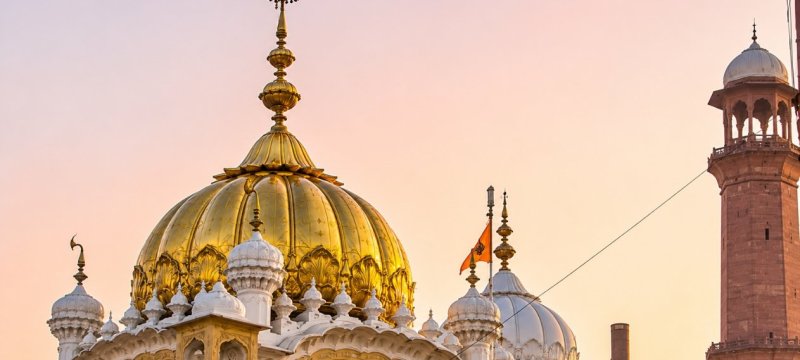
LAHORE: A centuries-old Sikh religious site in Lahore has opened its doors to worshippers after nearly eight decades, following restoration work carried out by Pakistani authorities.
Gurdwara Chhevin Patshahi Sri Guru Hargobind Sahib, located on Temple Road in the Mozang neighbourhood, resumed religious activities on Sunday, November 8, 2026.
The historic building had remained inaccessible for regular worship since the 1947 Partition. Its reopening marks a significant development in Pakistan’s efforts to safeguard important religious landmarks and preserve Sikh heritage.
The restoration was completed through collaboration between the Punjab government, the Evacuee Trust Property Board (ETPB) and the Pakistan Sikh Gurdwara Parbandhak Committee (PSGPC).
Punjab Minister for Minorities Affairs Sardar Ramesh Singh Arora attended the reopening ceremony along with ETPB Secretary Nasir Mushtaq, Sikh community representatives and religious leaders.
The restored facility will once again serve as a place where Sikh devotees can gather for prayers and other religious activities.
The shrine has a special connection with Guru Hargobind Sahib, the sixth Guru of Sikhism. Historical Sikh accounts describe his visit to Lahore in 1619, when he reportedly stayed for three days at the home of his follower Bhai Jiwan in Mozang.
Following the visit, Bhai Jiwan dedicated his residence to the Guru’s memory, transforming it into a place of religious significance for the Sikh community.
Another important historical association involves Bhai Bidhi Chand, a respected figure in Sikh tradition. He is remembered for travelling to Lahore on two occasions to retrieve horses named Dilbagh and Gulbagh, which had reportedly been taken by the Mughal governor.
The horses were intended as gifts for Guru Hargobind Sahib. The stories surrounding their recovery remain an important part of the shrine’s religious history.
The gurdwara also has a long institutional history. Its prayer hall was expanded by the local Sikh congregation in 1915, while a community management committee was established in 1921. The Shiromani Gurdwara Parbandhak Committee (SGPC) subsequently assumed its administrative management in 1927.
However, regular religious activities came to a halt following the Partition in 1947, leaving the historic property closed for generations.
Speaking at the reopening event, Sardar Ramesh Singh Arora said the government was also working to rehabilitate more than 50 Sikh religious sites across Pakistan.
He said these projects were intended to protect historic places of worship and provide improved facilities for Sikh devotees visiting religious landmarks.
The minister described the restoration of the Mozang gurdwara as part of wider efforts to preserve the country’s religious diversity and historical identity.
ETPB Secretary Nasir Mushtaq also highlighted the importance of maintaining historic religious properties. He said the board would continue its work to restore Sikh gurdwaras and Hindu temples while improving facilities for members of minority communities.
He also acknowledged the contributions of former PSGPC president Sardar Bishan Singh and Professor Dr Mampal Singh towards the preservation of the historic shrine.
Lahore has strong historical links with Sikhism and contains several important religious landmarks associated with Sikh Gurus and other prominent figures.
The reopening of Gurdwara Chhevin Patshahi brings an important part of that heritage back into active religious use. After remaining closed since 1947, the Mozang shrine is once again welcoming Sikh worshippers.
In other news read more about: Looking for a Government Job in Punjab? PECTAA Announces 105 New Vacancies
The development also highlights the role of cooperation between government departments and religious organisations in protecting historic buildings and ensuring that significant places of worship remain accessible to future generations.