LAHORE: Punjab is introducing a digital On-Screen Marking (OSM) system to modernise the checking process for students’ examination papers.
Provincial Education Minister Rana Sikandar Hayat announced the initiative as part of ongoing reforms in the province’s education sector.
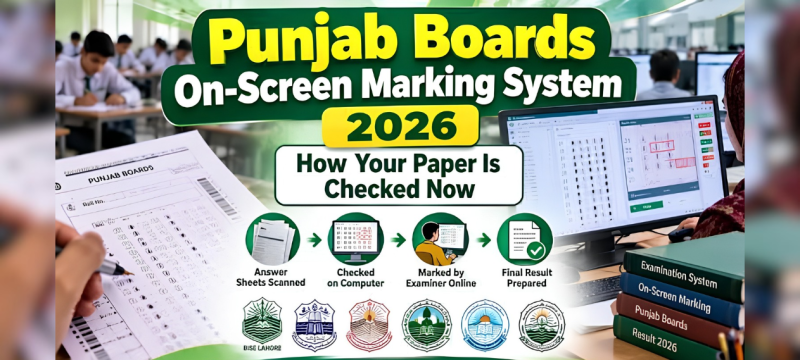
Under the new system, students’ answer sheets will be scanned and checked digitally instead of using traditional manual marking methods.
The system will also use facial recognition technology to verify examiners before allowing them to check papers.
The initiative aims to improve transparency, reduce marking errors, and ensure greater accuracy in Board Exams across Punjab.
The minister shared a video demonstrating how the digital marking system will operate.
How Punjab’s New Digital Marking System Works
The demonstration featured the Board of Intermediate and Secondary Education (BISE) Bahawalpur.
During the demonstration, examination answer sheets were placed inside a high-speed scanner.
The scanner converted the physical papers into digital copies within seconds.
These scanned answer sheets then appeared on an online dashboard for examiners to review.
Registered examiners can access the digital copies and check students’ answers directly on their computer screens.
The dashboard also allows education authorities to monitor the marking process in real time.
This feature is expected to improve supervision and reduce delays in checking examination papers.
Facial Recognition Introduced for Examiner Verification
One of the major features of the new system is facial recognition technology.
Before starting the marking process, examiners must verify their identities through facial recognition.
The system allows access only when the registered examiner’s face matches the stored identity.
If two faces appear in front of the camera simultaneously, the system automatically locks access.
This security feature aims to prevent unauthorised individuals from checking examination papers.
The system also includes an artificial intelligence-assisted checking feature to support examiners during marking.
However, the demonstration did not establish whether AI would independently award marks or only assist human examiners.
Punjab Plans E-Sheets for Four Science Subjects
The digital marking initiative follows another major decision by Punjab’s nine educational boards.
Earlier this month, board chairpersons agreed to introduce e-sheets for four science subjects starting next year.
The decision will apply to selected subjects in matriculation and intermediate examinations.
Education authorities have also finalised the subjects selected for the initial implementation of on-screen marking.
Under the proposed arrangements, students will continue writing their answers on physical examination sheets.
These papers will then be scanned and uploaded for digital checking.
The changes are expected to modernise Board Exams while maintaining the existing written examination format.
Digital Marking Aims to Improve Transparency
Punjab’s education authorities expect the new system to make examination marking more efficient and transparent.
Digital checking could help reduce human errors and improve consistency in evaluating students’ answers.
Real-time monitoring will also allow officials to track marking progress and identify possible delays.
Facial recognition is intended to strengthen accountability by ensuring that only authorised examiners access answer sheets.
The introduction of digital tools represents another step towards modernising Punjab’s examination system.
The reforms are particularly important for students appearing in matric and intermediate examinations across the province.
However, authorities have not announced a complete implementation schedule for every educational board.
The effectiveness of the system will depend on its implementation and the training provided to examiners.
In other news read more about Punjab Education Minister Warns Against Unauthorized Entry Into Girls’ Schools
Punjab’s latest initiative aims to make Board Exams more accurate, secure, and transparent for students.