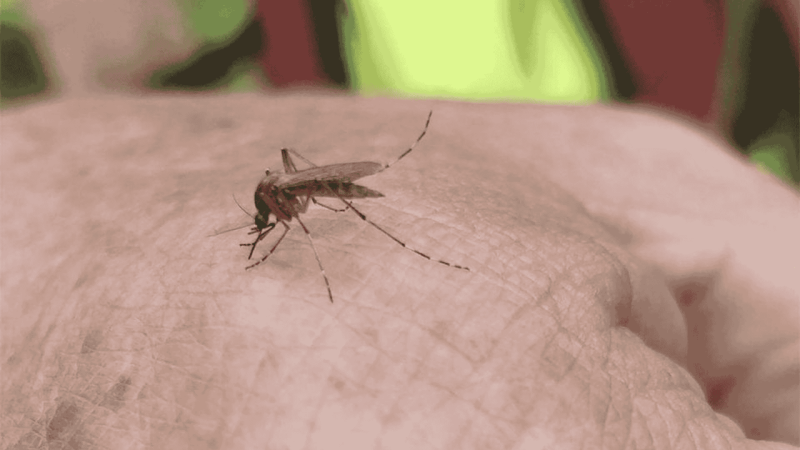
Mosquitoes have been found in Iceland for the first time, marking a historic change for one of the world’s few mosquito-free regions. The discovery was confirmed by researcher Matthías Alfreðsson from the Natural Science Institute of Iceland, who spoke to AFP on Monday.
According to Alfreðsson, three Culiseta annulata mosquitoes—two females and one male—were spotted about 20 miles north of Reykjavik, the country’s capital. The insects were collected from wine ropes used to attract moths. This method involves dipping fabric strips into a sugary wine mixture and hanging them outdoors to lure insects.
The Icelandic Monitor reported that a local resident, Björn Hjaltason, noticed the mosquitoes in his backyard over several days. He managed to catch them and sent the specimens to Alfreðsson for identification. “If three of them came straight into my garden, there were probably more,” Hjaltason told the newspaper.
Alongside Antarctica, Iceland has long been known as one of the few places on Earth without mosquitoes. Nearby countries such as Norway, Scotland, and Greenland all have mosquito populations. Alfreðsson confirmed that this is the first record of mosquitoes living naturally in Iceland. He mentioned that a single Aedes nigripes specimen was once found on an airplane years ago, but it was never preserved.
The appearance of mosquitoes in Iceland could suggest a recent introduction, possibly through ships or shipping containers. Researchers plan to conduct further monitoring in the spring to see if the insects have spread.
Although rising temperatures caused by climate change often support mosquito populations, Alfreðsson believes this discovery is not linked to warming. The species appears well adapted to cold conditions, capable of surviving harsh winters when temperatures fall below freezing.
He added that the insects’ varied breeding habitats make it easier for them to survive in Iceland’s challenging environment. Authorities are now watching closely to see if this marks the beginning of a new mosquito population in the country.
In other news read more about: Tiger Mosquitoes Responsible For Increasing Dengue Fever Cases In Europe