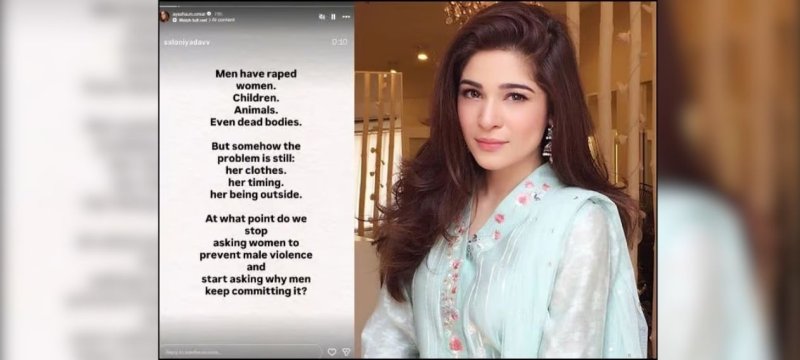
Pakistani actress Ayesha Omar has spoken out against the way victims of sexual violence are often treated, questioning why attention is frequently placed on victims instead of those accused of committing the crime.
Omar shared a post on her Instagram Story that highlighted concerns about victim-blaming attitudes. The message focused on women and children who experience sexual violence and questioned why people often ask what a victim was wearing, when they left home, or why they were outside.
The post argued that such questions can shift attention away from the alleged perpetrators and their actions. It called for greater focus on the conduct of those accused and on ensuring that victims are treated with protection and dignity.
The message also pointed out that sexual violence can affect women, children and men. It referred to the broader issue of how victims are questioned and judged following reported incidents, rather than keeping attention on the alleged criminal behaviour.
Omar did not identify any specific case or individual in her Instagram Story. Instead, she appeared to be highlighting the wider social issue of victim blaming and the need for greater accountability when allegations of sexual violence are reported.
The discussion comes as cases involving sexual violence continue to receive public attention and raise concerns about justice, privacy and victim protection. Supporters of victims have repeatedly called for people reporting such incidents to be treated with sensitivity during investigations and legal proceedings.
At the same time, allegations in individual cases must be established through proper investigations and legal processes. Public discussion or social media posts alone do not determine guilt or responsibility.
In other news read more about Yashma Gill Condemns Attack On Pregnant Woman Over Baby’s Sex
Through the shared message, Ayesha Omar drew attention to the broader conversation around victim blaming and accountability. Her post called for greater focus on the actions of alleged perpetrators while emphasizing the need to protect people affected by sexual violence.