

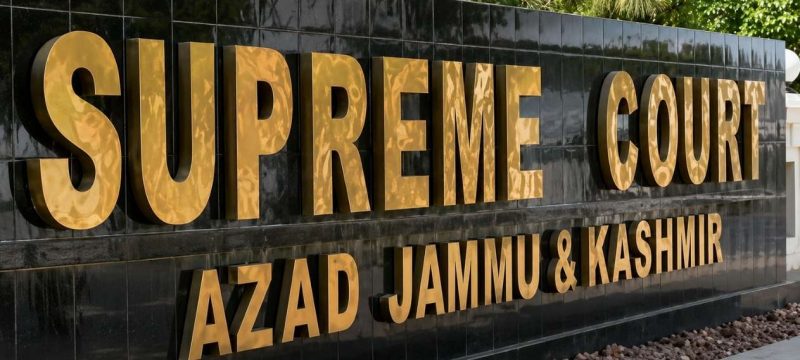
Supreme Court of Azad Jammu and Kashmir (AJK) has issued an important opinion on the long-debated issue of refugee seats in the legislative assembly. The court supported the government’s position and emphasized that any change to the existing arrangement must follow constitutional procedures.
The matter reached the Supreme Court through a reference filed under Article 46A on the advice of the AJK government. The reference sought legal clarification regarding the status of 12 reserved refugee seats in the legislative assembly.
In its opinion, the court ruled that these seats are protected under Article 22 of the Constitution. It stated that the refugee seats cannot be altered through executive decisions or administrative actions. According to the court, their legal status is safeguarded by constitutional provisions.
The Supreme Court also reviewed the historical background of the refugee seat arrangement. The judgment referred to legal frameworks introduced in 1960, 1964, and 1970, as well as later constitutional developments. These included the 1974 Constitution and the 1975 Act, which helped shape the current system.
The court made it clear that any modification to the structure of refugee seats would require a constitutional amendment under Article 33. It stressed that such matters fall within the authority of the legislature and cannot be decided outside the constitutional process.
According to the ruling, constitutional changes must be carried out through elected representatives, parliamentary discussions, and public mandate. The court emphasized that democratic institutions must remain the primary platform for making constitutional decisions.
The judgment also addressed ongoing public debate regarding the issue. The court observed that constitutional authority cannot be influenced by protests or public pressure. Instead, it highlighted the importance of respecting legal and parliamentary procedures.
At the same time, the court reaffirmed the right to peaceful protest. However, it stated that this right does not allow actions that disrupt public life or interfere with the rights of others. The state, the court noted, remains responsible for maintaining law and order.
The court further supported the government’s decision to refer unresolved constitutional matters to the elected assembly. It also stressed that elections under Article 22(4) should be held on time and should not be delayed because of political agitation.
Legal experts believe the ruling strengthens the constitutional framework governing elections and legislative representation. They say the decision reinforces the principle that constitutional change can only be achieved through democratic institutions and the legislative process.
In other news read more about: Gilgit-Baltistan Elections 2026 Full Candidates List and Constituency-Wise Details Released
The opinion is being viewed as a significant development in AJK politics, as it provides clarity on the legal status of refugee seats and reaffirms the role of parliament in constitutional matters.