

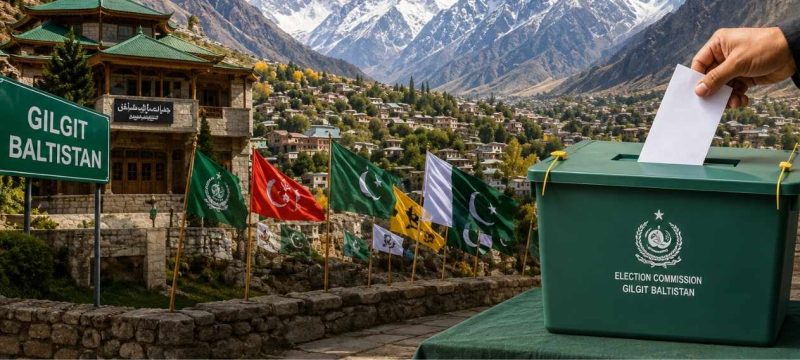
Polling for the Gilgit-Baltistan Elections has officially begun across all 24 constituencies of the Gilgit-Baltistan Legislative Assembly. Voters are casting their ballots under strict security arrangements as political parties and independent candidates compete to form the region’s next government.
The elections are being held after the previous assembly completed its term in November 2025. The vote was initially expected to take place in January 2026 but was postponed because of severe winter weather conditions. Authorities later rescheduled the elections for June 2026.
The Gilgit-Baltistan Assembly consists of 33 seats. These include 24 general seats, six reserved seats for women, and three reserved seats for technocrats and professionals. A political party or coalition needs at least 17 seats to secure a majority and form the government.
The Gilgit-Baltistan Elections are being contested in 24 constituencies, ranging from GBA-1 to GBA-24. Gilgit district has three constituencies, while Nagar has two and Hunza has one. Skardu contains four constituencies, making it one of the most politically significant districts. Diamer also holds four seats, while Ghizer and Ghanche have three constituencies each.
A total of 403 candidates are competing for the 24 general seats. Among them, 272 are independent candidates and 131 are affiliated with political parties. Female representation remains limited, with only around eight women contesting on general seats.
Several constituencies are attracting special attention due to intense competition. GBA-2 in Gilgit is considered the most crowded race, with around 40 candidates in the field. GBA-14 in Astore follows with approximately 33 candidates. Other highly contested seats include GBA-1, GBA-3, GBA-4, and GBA-5.
Major political parties are actively participating in the election. The Pakistan Peoples Party (PPP) has fielded around 23 candidates and remains one of the strongest contenders. Notable PPP candidates include Amjad Hussain Azar in GBA-1, Jamil Ahmed in GBA-2, and Col (R) Imtiaz-ul-Haq in GBA-6.
The Pakistan Muslim League-Nawaz (PML-N) is contesting with around 22 candidates. Key names include Hafiz Hafeez-ur-Rehman in GBA-2, Muhammad Shafiquddin in GBA-1, Prince Saleem in GBA-6, and Rana Muhammad Farooq in GBA-14.
The Istehkam-e-Pakistan Party (IPP) has entered the race with around 15 candidates, including Fatehullah Khan in GBA-2. Meanwhile, PTI-backed candidates are participating as independents in several constituencies, including Atiq Ahmed Pirzada in GBA-2 and Muhammad Ilyas Siddiqi in GBA-1.
Several smaller parties, including JUI-F, Jamaat-e-Islami, MQM-P, MWM, PML-Q, and others, are also contesting. Political analysts believe these parties and independent candidates could play a major role in post-election alliances.
The Gilgit-Baltistan Elections are being shaped by key issues such as infrastructure development, employment opportunities, land ownership disputes, constitutional rights, and governance reforms. With no party expected to secure an outright majority, coalition politics may become essential after the results are announced.
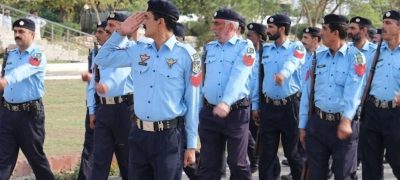
Security remains tight across the region, with law enforcement agencies monitoring polling stations and maintaining order. Polling will continue until 5:00 PM, after which vote counting will begin. Initial trends are expected later in the evening, while final results may take one to two days.
In other news read more about: GB Elections 2026 Polling Begins Across Gilgit-Baltistan Amid Tight Security Arrangements
With 403 candidates in the race and a highly competitive political landscape, the outcome of the Gilgit-Baltistan Elections remains wide open and could depend heavily on coalition-building after polling concludes.