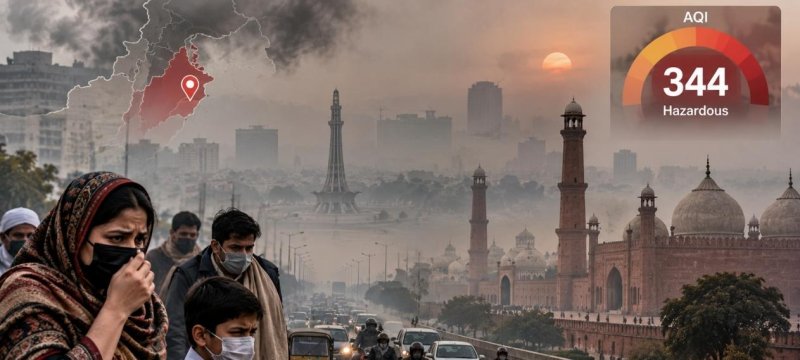
Lahore emerged as the world’s most polluted major city on Friday morning, with an Air Quality Index (AQI) of 344, according to the reported air quality monitoring figures. The worsening smog raised concerns about respiratory health and outdoor exposure across the provincial capital.
According to the reported IQAir rankings, Lahore held the top position at around 8am. The reading indicated very unhealthy air conditions, highlighting the severity of the city’s seasonal pollution problem.
The situation varied across neighbourhoods, with some locations recording substantially higher pollution levels than the citywide figure.
Iqbal Town Records AQI of 535
Iqbal Town recorded the highest reported AQI in Lahore at 535, indicating extremely hazardous conditions under the reported readings.
Other areas also registered elevated pollution levels on Friday morning.
- Iqbal Town: 535 AQI
- Airwash Bedian Road: 497 AQI
- Kahna: 446 AQI
- Defence Phase 5: 360 AQI
- Model Town: 350 AQI
- Barki Road: 253 AQI
These figures highlight the uneven distribution of air pollution across Lahore. Residents in heavily affected neighbourhoods may face greater exposure, particularly when spending extended periods outdoors.
AQI values can change throughout the day depending on weather conditions, pollutant concentrations and monitoring locations.
PM2.5 Pollution Raises Health Risks
Fine particulate matter, commonly known as PM2.5, was identified as the main pollutant in the reported IQAir data.
These particles are small enough to travel deep into the lungs. Some components of particulate pollution can also enter the bloodstream, increasing the risk of serious health complications.
According to the supplied monitoring figures, Lahore’s PM2.5 concentration was approximately 57 times the World Health Organization’s annual guideline level.
Long-term exposure to fine particle pollution is associated with heart disease, stroke, lung cancer and chronic respiratory problems. Short-term exposure to heavily polluted air can also worsen asthma and cause breathing difficulties.
Children, older adults and people with existing heart or lung conditions are particularly vulnerable.
Residents should check local air quality updates before going outdoors. When pollution levels are high, limiting strenuous outdoor activities and using a well-fitting particulate respirator, such as an N95 or equivalent, can help reduce exposure.
Delhi Ranks Second Among the World’s Most Polluted Cities
The reported global rankings placed India’s capital, Delhi, in second position with an AQI of 244.
Senegal’s capital, Dakar, followed with a reading of 184. Mumbai recorded 179, while Kolkata registered 172.
These figures reflected the air quality readings reported for the monitoring period. International city rankings can change quickly as pollution levels fluctuate.
For accurate comparisons, readers should check the same monitoring platform and reporting time because AQI scales and measurement methods can differ between providers.
What Is Causing Lahore’s Smog?
Lahore regularly experiences severe seasonal air pollution during the cooler months. Several sources contribute to the problem, including vehicle exhaust, industrial emissions, construction dust and the burning of agricultural residue.
Weather conditions can make the situation worse. Cooler air and limited wind movement may prevent pollutants from dispersing, allowing harmful particles to accumulate near ground level.
The combination of emissions and unfavourable weather can create dense smog across residential, commercial and industrial areas.
Addressing the problem requires sustained efforts to control emissions, enforce environmental regulations, manage construction dust and reduce open burning.
Air Pollution Poses a Serious Threat to Children
Children face particular risks from polluted air because their lungs and immune systems are still developing. Exposure to fine particles can contribute to respiratory infections and worsen existing breathing conditions.
UNICEF has highlighted the risks air pollution poses to children’s health, especially in heavily polluted regions of South Asia.
Prolonged exposure can also affect everyday life by limiting outdoor activities and increasing pressure on healthcare services. Severe smog may disrupt school routines, transport and other essential activities.
Residents can take practical steps to reduce exposure:
- Check the latest AQI readings before leaving home.
- Keep windows closed when outdoor pollution is severe.
- Avoid unnecessary outdoor exercise during high-pollution periods.
- Use a well-fitting N95 or equivalent particulate respirator outdoors when appropriate.
- Keep children and vulnerable family members away from heavily polluted outdoor environments.
People experiencing severe breathing difficulties, chest pain or other concerning symptoms should seek medical attention.
Lahore’s Air Quality Remains a Major Concern
The reported AQI of 344 for Lahore and the much higher readings in several neighbourhoods underline the continuing challenge of seasonal smog in Pakistan’s major urban centres.
Residents should follow updated local monitoring reports and official public health advice, as pollution levels may rise or fall during the day.
In other news read more about: Faisalabad Declared Pakistan’s First Circular City
Disclaimer: This report is based on air quality figures supplied for October 23, 2026. The citywide and neighbourhood readings have not been independently confirmed for the stated reporting time. AQI values may vary by monitoring platform, location and measurement period.