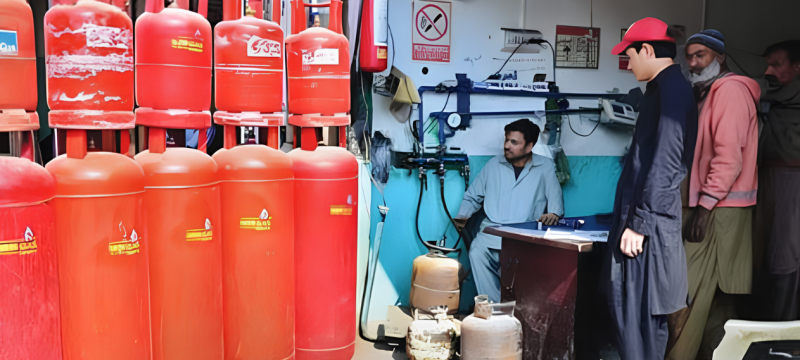
LPG prices have surged to Rs500 per kilogram in Punjab and Khyber Pakhtunkhwa (KP). The increase has placed additional financial pressure on households already struggling with rising living costs.
According to Irfan Khokhar, chairman of the LPG Distributors Association, the government set the official LPG rate at Rs279 per kilogram for October 2026.
However, consumers in Punjab and KP are reportedly paying as much as Rs500 per kilogram. In some hilly areas, the price has climbed to Rs600 per kilogram.
The significant gap between official and market rates has raised concerns about price enforcement. Consumers are demanding stronger monitoring to prevent excessive charges.
LPG Prices Exceed Officially Notified Rates
Khokhar criticised the Oil and Gas Regulatory Authority (OGRA) over the rising market prices. He alleged that the regulator had failed to take effective action against overcharging.
He also urged the government to use the Sui Southern Gas Company (SSGC) terminal to help control LPG prices.
The rising cost of LPG is particularly concerning for households that rely on it for cooking and heating. Many consumers turn to LPG where pipeline gas is unavailable or supplies are limited.
The current market rates have intensified calls for regulatory action. Consumers want authorities to ensure that sellers follow officially notified prices.
Pakistan Prepares for Higher Winter Gas Demand
Meanwhile, Pakistan has received its first liquefied natural gas (LNG) shipment for October. The delivery is expected to support the country’s energy supply ahead of winter.
The LNG vessel Al Areesh arrived at the Engro LNG terminal on Tuesday at 11:05 am. The process of converting the imported LNG into natural gas began at noon.
Pakistan is expected to need 24 LNG cargoes to meet its gas requirements during winter 2026-27. However, rising consumption and supply constraints could create challenges.
Demand from Sui Northern Gas Pipelines Limited (SNGPL) is projected to increase significantly during the colder months. It could rise from 550 million cubic feet per day (mmcfd) to 1,550 mmcfd.
Similarly, demand served by SSGC is expected to increase from 300 mmcfd to around 500 mmcfd.
Industries Face Possible Gas Supply Disruptions
The widening gap between demand and available supplies has raised concerns about potential gas shortages. Several industrial and commercial sectors could face supply disruptions during winter.
These sectors include export-oriented industries, non-export industries, compressed natural gas (CNG) stations and cement manufacturers.
Although the latest LNG shipment provides some relief, further deliveries will be necessary to meet expected demand. Maintaining adequate supplies will remain a major challenge as winter consumption increases.
Meanwhile, high LPG prices continue to burden consumers in Punjab and KP. Stronger monitoring and effective enforcement may be needed to address the gap between official rates and market prices.
In other news read more about: LPG Prices Surge Amid Supply Shortages And Global Tensions