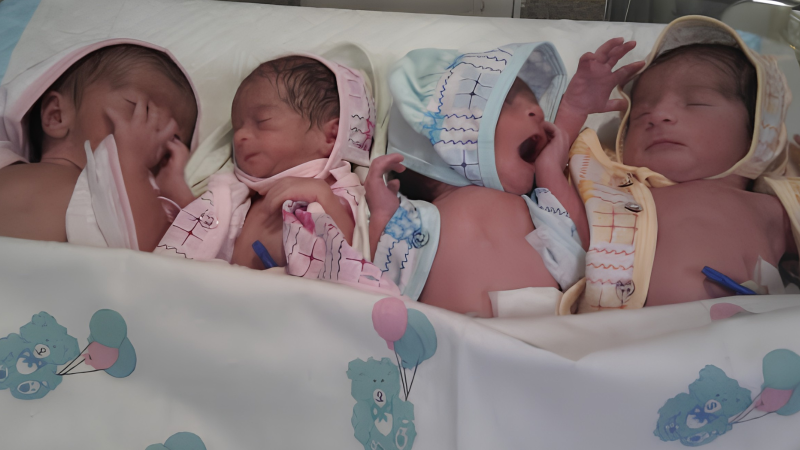
Approximately 18% to 20% of all people who die as patients in hospitals lose their lives due to preventable medical errors, according to data released by healthcare and patient safety experts at the Karachi Press Club. Maternal and newborn deaths in Pakistan remain among the highest in the world: according to a report by the World Health Organization, 675 newborns and 27 mothers die every day in the country.
A Pattern of Hospital Negligence: PIMS, Sahiwal, and Pakpattan
The outrageous incident of the fire in PIMS Hospital Islamabad recently exposed the negligent state of hospitals even in the heart of Islamabad, the metropolitan capital of Pakistan. PIMS did not have any functional fire safety systems, even though a fire had broken out a month earlier. Fourteen babies had their lives cut too short by administrative negligence. Reports from other hospitals after the incident shed light on the extreme shortage of neonatal infrastructure, with up to 70 babies inside a ward meant for 30.
Despite the shock the PIMS fire caused, it was not the first fire in a neonatal ward in Pakistan caused by negligence. In 2024, a fire in Sahiwal Teaching Hospital took the lives of 11 newborns and infants. A high-level inquiry ordered by Punjab Chief Minister Maryam Nawaz revealed that the hospital’s fire extinguishers had completely expired.
In 2025, 20 babies died in Pakpattan due to negligence. In one day, 5 newborns died in the hospital’s neonatal ward, exposing the alleged negligence of medical care among the staff. It was later confirmed that 20 children died over the week, including 11 newborns, four one-day-olds, four five-month-olds, and one five-year-old child. The FIR filed against the hospital accused staff of misplacing 4 babies within the hospital’s pediatric ward.
The Scale of the Crisis: Maternal and Newborn Deaths in Pakistan by the Numbers
675 babies and 27 mothers die every day in Pakistan from completely preventable medical complications — totalling 9,800 mothers and 246,300 newborns every year. There are also more than 190,000 recorded stillbirths in Pakistan every year.
The World Health Organization attributes this number to a concept called The Three Delays — delays caused by severe infrastructure shortages combined with the socioeconomic dimensions of gender inequality.
The First Delay: Seeking Medical Care
The First Delay happens due to a delay in seeking medical care. Up to 70% of decisions regarding seeking medical care are delayed because women are culturally restricted from making decisions. They must wait for consent from their husbands and fathers. This permission isn’t just a legal or emotional decision — it is literally a physical lock. A woman in labor or facing a medical crisis cannot simply walk out the door, hail a ride, or drive herself to a clinic. The absolute lack of physical mobility turns a treatable medical issue into a fatal delay.
Cultural norms strictly dictate that a woman cannot travel outside her home alone, let alone travel in a public vehicle or rickshaw with an unfamiliar male driver while in intense pain or labor. She must physically wait for a male relative — husband, father, brother, or father-in-law — to act as an escort. If the men are out in the fields, working in another city, or simply refuse to move, she is completely trapped.
Even if a woman wanted to risk the social backlash and leave alone, she rarely has independent control over cash. The money for a private ambulance, a local Suzuki van, or a rickshaw is held by the male head of the household. Clinical audits indicate that the initial delay in deciding to seek care is a factor in 32.4% to 41.4% of maternal deaths in the country.
A majority of women of reproductive age are also undernourished due to socioeconomic conditions. Over 41% of women of reproductive age in Pakistan suffer from anemia, and 14.4% are chronically underweight, according to public health data.
Pakistani women also become pregnant back to back, with no time to recover from the previous pregnancy. Closely spaced pregnancies exhaust maternal nutrient stores and prevent the uterus from recovering, which often results in severe anemia and placental insufficiency. These physical tolls directly contribute to high rates of preterm births and low-birthweight infants who struggle to survive.
The Second Delay: Reaching the Hospital
The Second Delay is reaching the hospital. Along with the gender disparity of a woman being unable to go to the hospital due to a lack of autonomous choice, Pakistan does not have a functional ambulance system in rural areas. Even in medical emergencies, families must negotiate with private local drivers — rickshaws, Suzuki pickups, or private cars. Drivers charge exorbitant emergency rates. A family often spends crucial hours begging neighbors for cash or trying to find a driver willing to transport a heavily bleeding, unconscious woman.
If a family manages to secure a vehicle, they usually go to the closest Basic Health Unit (BHU) or Rural Health Centre (RHC). These rural centers almost never have blood banks, functional surgical theaters, or anesthetists on duty. The staff hands the family a referral slip to a major city hospital. Families are routinely sent to two or three different facilities in a row because the first few clinics lack the basic tools to stop the bleeding. Each bounce on the road drains her remaining time.
In provinces like Balochistan or the desert regions of Sindh and South Punjab, the nearest tertiary care hospital capable of performing an emergency C-section or blood transfusion can be 50 to 100 kilometers away. Traveling this distance on unpaved, broken roads in a bumpy rickshaw speeds up internal injuries and uterine ruptures, causing the mother to go into irreversible shock before she ever sees a doctor.
Approximately 30% of maternal deaths in Pakistan are directly attributed to the Second Delay. Public tertiary hospitals in major cities report that a large share of the mothers who die in their emergency rooms are “dead on arrival” or in irreversible shock. The medical charts list the cause of death as “hemorrhage,” but the real cause was the hours spent trying to reach the hospital.
The Third Delay: Receiving Adequate Care
The Third Delay is the delay in receiving adequate care. As mentioned, rural health centers and public hospitals regularly face severe shortages of pediatric experts, functioning incubators, and essential emergency supplies like blood transfusion support.
Emergency rooms are often overwhelmed, leaving a lone doctor or nurse responsible for dozens of patients. This leads to catastrophic delays as staff require families to fill out paperwork, present identity documents (CNICs), or purchase their own medical supplies from external pharmacies before initiating treatment.
The Consent Bottleneck Behind It All
A reason for the delay that may encompass all three delays is the husband’s consent. Delays in decision-making caused strictly by women needing to secure external permission or a male relative’s consent contribute to 34% of all home-to-transit maternal deaths. Out of the 27 mothers who die every single day in Pakistan, 9 of those women lose their lives directly due to this first bottleneck.
Conclusion: A System Failing Pakistan’s Mothers
A lot of these problems reveal how the system of Pakistan — the lack of bodily autonomy, the lack of medical equipment in the neonatal wards, the skewed power of the hospital administration, and the lack of medical care facilities and ambulances — fails the mothers of Pakistan.
References
- World Health Organization (WHO EMRO) — Every day, 675 newborns and 27 mothers die in Pakistan – WHO calls for urgent action
- Al Jazeera — At least 14 babies killed in Pakistan hospital nursery fire
- AP via Gulf News — Pakistani investigators visit hospital nursery where fire killed 14 newborns
- ARY News — Sahiwal hospital fire coverage and CM Maryam Nawaz inquiry committee
- ProPakistani — Untrained Nurses Responsible for Deaths of 20 Newborns in Punjab Govt Hospital
- Geo News — MS, CEO of DHQ Hospital Pakpattan arrested over deaths of 20 children