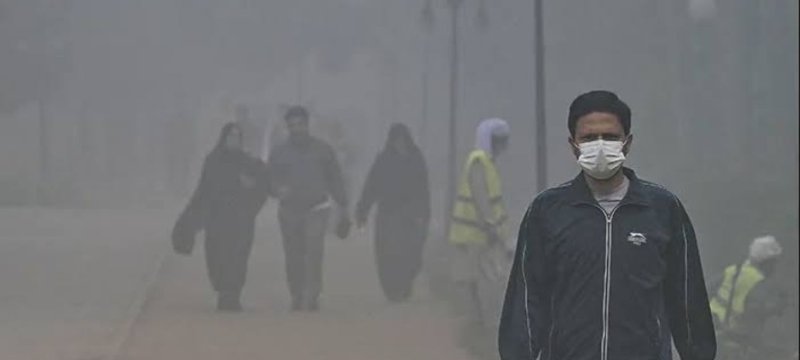
Multan has become Pakistan’s most polluted city, with its Air Quality Index (AQI) reaching 987. The reading was recorded at 9:00 am on November 11, according to real-time air quality data.
The latest pollution rankings show worsening air quality across several major cities. Multiple urban centres are experiencing extremely high pollution levels. Punjab remains particularly affected, with several cities reporting alarming AQI readings.
Kahna Nau in Punjab ranked second with an AQI of 734. Faisalabad followed in third place with a reading of 587. Raiwind secured fourth position with an AQI of 571. Lahore ranked fifth among Pakistan’s most polluted cities. Its AQI reached 499 during the reported period. Gujranwala also recorded a high reading of 488.
The situation extends beyond Punjab. Peshawar recorded an AQI of 285, while Bahawalpur reported 248. Sialkot followed with 229, and Rawalpindi recorded an AQI of 211. These figures highlight the widespread air pollution affecting different parts of Pakistan. The latest pollution rankings also show significant differences between cities. However, several locations continue to face unhealthy air conditions.
Lahore’s air quality remained particularly concerning. Fine particulate matter, known as PM2.5, was identified as the city’s main pollutant. Its concentration reached 323 micrograms per cubic metre. The city also recorded a temperature of 25 degrees Celsius. Wind speed stood at 3 kilometres per hour. Humidity was recorded at 27 percent.
Monitoring stations across Lahore reported even higher pollution levels in several localities. CERP Office recorded the highest station-level AQI at 756. Allama Iqbal Town followed closely with a reading of 752. Burki Road Paragon recorded an AQI of 712. Other monitoring locations also reported elevated readings. ARM recorded 557, while AirWatchPakistan reported 523. ARC Lahore registered an AQI of 458.
The station-level figures show that pollution levels vary across different parts of Lahore. Some neighbourhoods are experiencing considerably worse conditions than the city’s overall reading suggests. The latest pollution rankings place Multan at the top nationally. However, the high readings in Lahore, Faisalabad, Gujranwala and other cities reflect a wider air quality problem.
PM2.5 particles are especially concerning because of their small size. They can enter the respiratory system when people breathe polluted air. High concentrations can therefore pose health risks, particularly for vulnerable groups.
In other news read more about New Travel Timings Advised For Travel on Motorways Amid Fog
The reported readings underline the severity of Pakistan’s current air pollution situation. Air quality conditions remain a major concern across several urban areas. Further monitoring will help track changes in pollution levels.