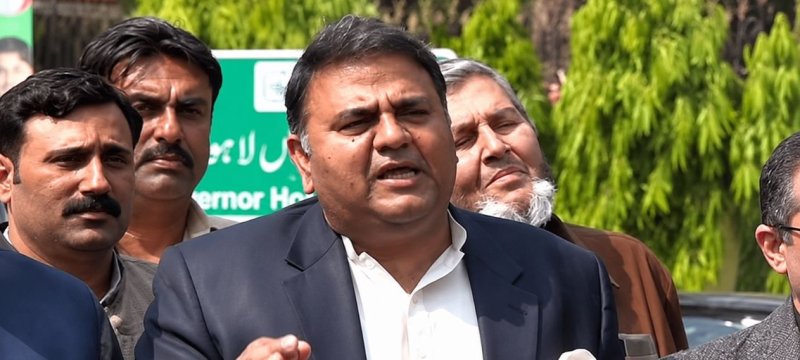
Former Pakistan Tehreek-e-Insaf (PTI) leader Fawad Chaudhry has predicted that Pakistan could see a constitutional amendment before December 15, potentially paving the way for the creation of new provinces.
Speaking to journalists outside an anti-terrorism court (ATC) in Lahore, Chaudhry discussed possible constitutional changes, political negotiations and the country’s administrative structure.
According to media reports, he predicted that a proposed 28th Constitutional Amendment could be introduced before December 15. He also claimed that the amendment could lead to the creation of 15 to 17 additional provinces.
However, the timeline and proposed changes remain Chaudhry’s prediction. His remarks do not confirm that the government has approved the amendment or finalised plans to establish new provinces.
The issue has renewed attention on administrative reforms and the possibility of restructuring Pakistan’s existing provincial system.
Chaudhry said he expected a constitutional amendment to be introduced before December 15, potentially bringing significant changes to the country’s administrative arrangements.
He argued that the creation of additional provinces could become part of the proposed constitutional changes.
The former federal minister also discussed PTI founder and former prime minister Imran Khan, claiming that Khan had been among the political figures supporting the creation of new provinces.
Chaudhry suggested that PTI could play a role in discussions about administrative restructuring if the party adopted an effective political strategy.
He did not provide a confirmed list of proposed provinces or specify their geographical boundaries. No official decision confirming the creation of 15 to 17 new provinces was established by the remarks cited in the report.
Creating new provinces in Pakistan would require constitutional changes and the completion of the applicable legislative process.
Article 239 of Pakistan’s Constitution establishes the procedure for constitutional amendments. Such bills require approval by at least two-thirds of the total membership of each house of Parliament.
If a constitutional amendment changes the boundaries of a province, Article 239(4) also requires approval from the relevant provincial assembly by at least two-thirds of its total membership before the bill can be presented to the president for assent.
These constitutional requirements mean that a political prediction alone cannot establish a new province. Any proposed restructuring must pass through the relevant legislative process before becoming law.
Chaudhry also commented on political tensions between the federal government and PTI, arguing that dialogue was necessary to address their continuing differences.
He questioned the consistency of PTI’s political strategy, pointing to what he described as contrasting messages from party representatives about negotiations and political action.
According to Chaudhry, some leaders appeared open to talks with the government, while others discussed more confrontational approaches.
He criticised the party’s current leadership and questioned its ability to develop a clear negotiating strategy. These remarks represented his personal political assessment and should not be interpreted as an official PTI position.
The former PTI leader also discussed the possibility of governor’s rule in Khyber Pakhtunkhwa (KP). He argued that such an arrangement could not continue indefinitely and referred to constitutional limits on federal intervention in provincial affairs.
Article 234 of Pakistan’s Constitution provides a framework for federal action when the constitutional machinery of a province is considered to have failed. It also establishes provisions for parliamentary oversight and limits on the duration of such a proclamation.
Chaudhry’s comments formed part of his wider discussion about constitutional governance and the country’s political situation. Any decision concerning governor’s rule would need to comply with the applicable constitutional provisions.
He also expressed support for concerns raised by Jamiat Ulema-e-Islam-Fazl (JUI-F) chief Maulana Fazlur Rehman.
Chaudhry referred to reported deaths of political workers while discussing security challenges facing political organisations. His remarks highlighted political grievances and security concerns, although the statement did not provide independently verified details about the incidents.
Whether Pakistan will create additional provinces after December 15 remains uncertain. Chaudhry’s prediction has brought renewed attention to a longstanding debate about administrative restructuring, governance and public service delivery.
Supporters of smaller provinces argue that additional administrative units could improve governance and make public services more accessible. However, restructuring would involve complex questions about provincial boundaries, political representation, resources and administrative responsibilities.
In other news read more about: Pakistan Introduces Mandatory Internship Policy for University Students
For now, December 15 remains a timeline cited by Fawad Chaudhry rather than a confirmed government deadline. Further developments will depend on whether a formal constitutional proposal is introduced and secures the required approvals.