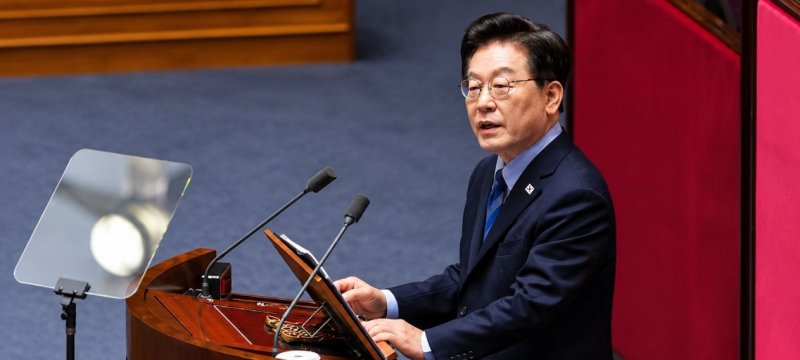
South Korean authorities have launched a formal investigation after sensitive personal information belonging to President Lee Jae Myung and 167 other individuals was exposed on an online platform.
The leaked information reportedly included passport numbers, dates of birth, names and other personal details of senior government officials, security personnel and journalists who accompanied the president on his European visit in June 2026.
According to South Korean media reports, the information was uploaded to an online security-related platform on June 2, shortly before the presidential delegation travelled abroad.
The file reportedly remained accessible for nearly five months before authorities arranged for its removal.
The incident has raised serious concerns about the handling of confidential government documents and the protection of personal information belonging to senior officials.
The South Korean Foreign Ministry and National Police Agency are investigating how the document became available online and who was responsible for the disclosure.
President Lee Jae Myung, First Lady Kim Hea Kyung and several senior government representatives were among the 168 affected individuals.
The leaked document reportedly contained a passenger list associated with the presidential aircraft during the president’s visits to Belgium, Italy and France for a Group of Seven summit.
The information included passport numbers, dates of birth, names in Korean and English, official positions, organisational affiliations and passport validity details.
Reports indicate that the file was uploaded to a security-related website that allows users to scan files and website addresses for potential malware.
The platform also allows certain users to access uploaded files, creating concerns about the exposure of sensitive information.
Authorities have not established who uploaded the document or whether anyone downloaded and misused the information.
South Korea’s Foreign Ministry has confirmed that it is taking steps to replace passports belonging to all affected individuals, including the president and first lady.
Foreign Ministry spokesperson Park Doo-soon said the government was working with the National Police Agency and other relevant institutions to investigate the incident.
Officials have also arranged for the leaked document to be removed from the platform.
The ministry is examining computers and email accounts connected to preparations for the president’s June overseas visit to determine how the information was exposed.
Authorities are treating the incident as a data leak rather than a confirmed hacking attack.
The investigation will examine whether the disclosure resulted from improper document handling, security weaknesses or another failure in information management.
The National Police Agency has launched a formal investigation into the exposure of personal information belonging to the 168 individuals.
Investigators are examining how the passenger list reached the online platform and whether any individual was responsible for uploading it.
The presidential office has also held an emergency meeting to discuss the incident and assess its possible consequences.
Presidential Chief of Staff Lim Kwang-hyun described the disclosure as a serious matter and called for a detailed investigation.
He also instructed relevant government agencies to review security procedures for presidential overseas visits and introduce measures to prevent similar incidents.
Although the leaked information has been removed, authorities have not yet established whether it was accessed or distributed beyond the original platform.
The incident has highlighted the risks associated with storing and sharing sensitive government documents through online services.
Passport numbers and personal identification details can create security and identity-related risks if they fall into the wrong hands.
South Korean authorities are now focusing on identifying the source of the disclosure, assessing potential damage and strengthening information security procedures.
In other news read more about: Hackers Spark Nuclear War Panic in Russia and Ukraine with Fake Emergency Alerts
The investigation remains ongoing, and officials have not announced a final explanation for how the sensitive passenger information became available online.