Who Are the “Rat Children” of Pakistan?
At the shrine of Shah Daula in Gujrat, Punjab, there is a common belief: a childless woman who prays there will be given a child, but her first baby will be born with a very small head and must be left at the shrine. If she keeps it, the belief goes, every child after will be born the same. The children left behind are called chuas or chuhas, the rats of Shah Daula. A second belief says the keepers of the shrine press iron caps onto babies’ heads to keep them small and make them better beggars.
Neither belief is true as told. These are people with primary microcephaly, a genetic condition, and the rest of this article is about what the beliefs hide. It uses the words “rat children” only because that is how the story is searched for and told, and because the word itself shows what is wrong with how we talk about them.
What Causes Microcephaly in Pakistan?
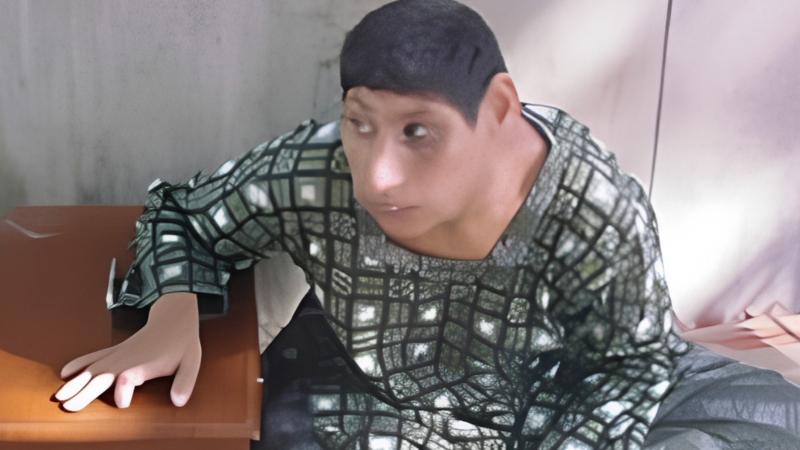
Primary microcephaly is a congenital condition in which a baby is born with a markedly smaller head and brain. Affected people often have mild to moderate intellectual disability, and the condition is recessive, meaning a child inherits it when both parents carry the same faulty gene.
Pakistan matters to this science more than most countries. Most of the 25 genes linked to primary microcephaly were discovered in Pakistani families, and a 2025 study names ASPM as the gene most frequently mutated in the Pakistani population. Researchers attribute the high prevalence to frequent cousin marriages and a lack of genetic counselling. Nothing about it is a curse, a saint’s price or a punishment for parents. It is genetics.
Where Did the Shah Daula Legend Come From?
The shrine of Shah Daula in Gujrat is associated with a saint who lived between about 1581 and 1676. The legend says that couples who pray at the shrine for a child will be answered, but the first child will be born microcephalic and must be given to the shrine, or any further children will be the same.
The earliest written report of chuas at the shrine dates to 1839, and by 1891 there were about 100. The historian Michael Miles, who spent years going through the records, concluded that people with microcephaly probably began to gather at the shrine in a charitable spirit, and that this went wrong because power in the institution sat so heavily with the custodians, which turned care into exploitation for begging. The Punjab government later took over the shrine and stopped it taking microcephalic children. By 2009, Miles reported, only one or two chuas could still be found there.
Are Their Heads Really Deformed With Iron Caps?
This is the part of the story people repeat most. A widely believed account holds that an iron cap is placed on infants’ heads at the shrine to stop their growth and turn them into beggars. The evidence does not support it. In 1902, the superintendent of the Lahore Lunatic Asylum and the Inspector-General of hospitals in Punjab visited the shrine and concluded that the skull deformities were not artificial. Miles later found no solid evidence of deliberate deformation either.
The myth persists because it gives people a villain. A villain is easier to hate than a gene, and easier than asking why a family left a baby at a shrine. But the myth also does harm: it makes every person with microcephaly look like the product of a crime, and it buries the real one.
Why Is There So Little Research on the Children Themselves?
There is a lot of research on the genes. Almost none of it is about the lives of the people who carry them. Genetics papers are plentiful, and a recent study of 32 families still notes that a significant proportion of Pakistani families with primary microcephaly remain uninvestigated. On the human side, the record is thin and old: a bibliography of documents running from 1839 to 2009, a small qualitative study that blamed misconceptions in society for the children’s condition, and journalism. I could not find a current count of how many people with microcephaly live in Pakistan, how many are begging, or what care they have access to. When nobody counts a group, nobody is accountable for it.
How Are These Children Abused?
The documented abuse is exploitation. In a 2008 report, officials told AFP that many people with microcephaly in Gujrat had been sold by their families to begging gangs, who use the legend to get worshippers to give money to “God’s children.” The reporter saw a handler leading a microcephalic woman through Gujrat’s main bus station. A provincial child protection official said gangs also look for poor parents willing to sell a child they cannot afford to feed or shelter, and that the department planned a centre in Gujrat to stop the exploitation. I could not find what became of that centre.
This is not a one-off. The US State Department’s 2026 report says traffickers in Pakistan buy, sell, rent and kidnap children for begging, among other forms of forced labour. A child who looks different, who cannot speak for himself and whom passers-by believe is holy is, to a handler, a very profitable child.
What Do These Children Actually Need?
The answers are not mysterious. Babies born with microcephaly need early assessment and support, and their families need honest information and a way to say no to a legend. Couples who are cousins deserve access to genetic counselling before they marry or have children, not after. Protection agencies need to treat a person with microcephaly who is being controlled by a handler as a trafficking victim, not as part of the scenery. And the rest of us need to stop using the word “rats.” If you see a person who appears to be controlled by a handler while begging, you can call the national child protection helpline, 1121, or the police on 15.
The Story We Tell About Them
A legend is useful to anyone who profits from it. The shrine story gave one group a reason to give up their babies and another a reason to give money, and it gave the rest of us a reason to look away. The baby never had a say in any of it.
Sources
History of the chuas and the Shah Daula shrine
- The Chuas of Shah Daulah at Gujrat, Pakistan: Evidence, Historical Background and Development, with Bibliography 1839-2009 (Michael Miles)
- Rats of Shah Dola (Wikipedia): first recorded 1839; about 100 by 1891; 1902 inspection finding the skull deformities not artificial.
- The Chuas of Shah Daulah (SAGE Encyclopedia of Disability)
- The State of Pakistan’s “Rat People” (Changing Up Pakistan, quoting Miles)
- Shah Daula ke Choohay (Dawn, opinion)
Exploitation and begging
- Rat people forced to beg on streets (AFP via Dawn, 2008)
- Begging mafias use ‘rat people’ in Pakistan (Al Arabiya, 2 Aug 2008)
- A Study of Mystery and Misconceptions about Children having Microcephaly: Chuas of Shah Doula Peer (ResearchGate)
- 2026 Trafficking in Persons Report: Pakistan (US State Department)
Genetics of primary microcephaly in Pakistan
- An update of pathogenic variants in ASPM, WDR62, CDK5RAP2, STIL, CENPJ, and CEP135 underlying autosomal recessive primary microcephaly in 32 consanguineous families from Pakistan (Molecular Genetics & Genomic Medicine, 2020)
- Expanding the mutational spectrum of congenital microcephaly in Pakistani families (Frontiers in Genetics, 2025)
Helplines