

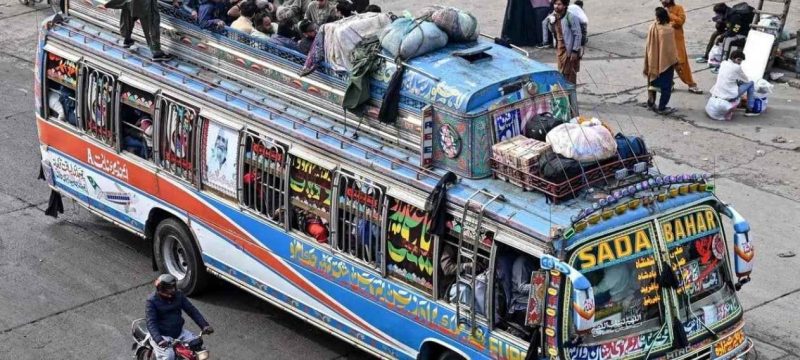
Transporters across Pakistan have increased fares by up to 30 percent following the recent rise in petroleum prices, adding fresh financial pressure on consumers already struggling with inflation.
Inter-city transport operators announced immediate fare hikes, stating that soaring diesel costs and limited government support made the increase unavoidable for sustaining daily operations nationwide.
Asmatullah Niazi, chairman of the All Pakistan Bus Terminals Owners Association and Punjab Transport Owners Association, said transporters were left with no alternative but to raise fares to cover operational expenses.
He explained that the Punjab government’s monthly subsidy of Rs100,000 for buses and Rs70,000 for goods trucks remains insufficient, as fuel expenses alone have risen sharply in recent weeks.
Transporters revealed that a single Lahore–Islamabad trip now consumes diesel worth nearly Rs120,000, significantly increasing operational costs and forcing operators to revise ticket prices immediately.
Freight charges have also jumped by up to 40 percent, raising transportation costs for construction materials such as cement and crushed stone supplied to major cities across Punjab.
Consumers have already begun feeling the impact in local markets, where shoppers reported noticeable price increases in vegetables, fruits, and other essential daily-use items.
Buyers claimed vegetable prices surged by nearly 40 percent, while flour, rice, and other household commodities recorded increases ranging between 20 and 40 percent in open markets.
Motorists also expressed frustration over the sudden petrol price adjustment, accusing oil marketing companies and petrol pump owners of benefiting from abrupt announcements allowing higher-priced fuel sales.
Meanwhile, the Lahore Chamber of Commerce and Industry warned that higher fuel prices could trigger another wave of inflation, affecting production costs and economic stability.
Business leaders cautioned that increasing transportation and manufacturing expenses may reduce industrial productivity and weaken Pakistan’s competitiveness in export markets.
Political parties and business groups in Balochistan also rejected the fuel price increase, warning that it would further worsen inflation and economic hardship for citizens.
The Balochistan Goods Truck Owners Association announced a 60 percent increase in goods transport fares, describing the decision as unavoidable due to rapidly rising diesel costs.
Economists warn that continued fuel price hikes could significantly raise the cost of living, placing additional financial strain on households and businesses across Pakistan.
Also read: Punjab Announces Free Public Transport Across Cities