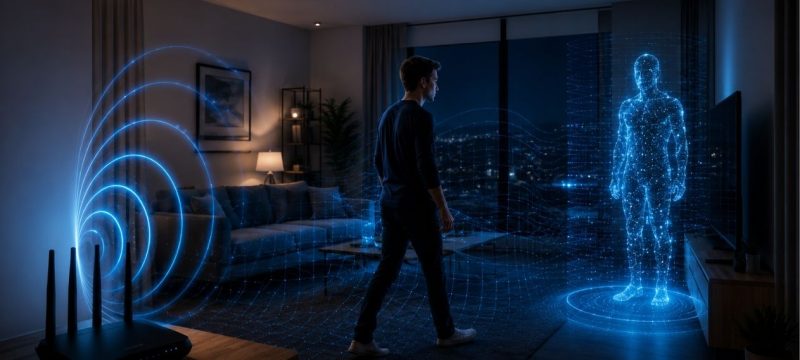
A new study suggests that Wi-Fi networks could identify people without using cameras or additional sensors. The findings have also raised concerns about privacy and surveillance.
Researchers at Germany’s Institute of Information Security and Dependability conducted the study. They examined how wireless radio signals interact with people in their surroundings.
According to the research, Wi-Fi signals could provide information that helps distinguish one person from another. This process does not require a traditional camera.
Researchers Test Wi-Fi Identification
The study involved 197 participants in a controlled environment. Researchers analyzed wireless signals to determine whether individuals could be identified.
According to the findings, the system achieved nearly 100 percent accuracy under the tested conditions.
Wireless signals normally travel through an environment before reaching connected devices. People and physical objects can influence how those signals move.
Researchers analyzed these changes to obtain image-like information about people within the surrounding area.
The findings suggest that wireless infrastructure could potentially perform functions beyond providing internet connectivity.
Smartphone May Not Be Required
One notable finding involves the equipment required for identification.
Researchers said the person being analyzed does not necessarily need to carry a smartphone. They may also not need another connected wireless device.
Instead, the technique analyzes radio signals moving through the surrounding environment.
This means Wi-Fi infrastructure could potentially detect information about people who are not actively using the network.
However, the reported results came from controlled research conditions. Real-world environments can contain additional factors that may affect accuracy and performance.
Privacy and Surveillance Concerns
Researchers have warned that the technology could create significant privacy concerns.
Unlike visible security cameras, wireless networks are already common in homes, offices and public spaces. People may not realize when radio signals are being analyzed for identification.
This could make such technology particularly important for future discussions about consent and surveillance. The research also highlights how existing communication infrastructure may potentially serve additional sensing purposes.
Further research could help determine how accurately these techniques work in complex real-world environments. The findings may also encourage discussions about privacy protections and responsible use of wireless sensing technologies.
In other news read more about: Google Backs Online Safety for Pakistani Families with $500,000 Investment
As Wi-Fi technology continues to develop, researchers and regulators may need to examine its wider privacy implications.