


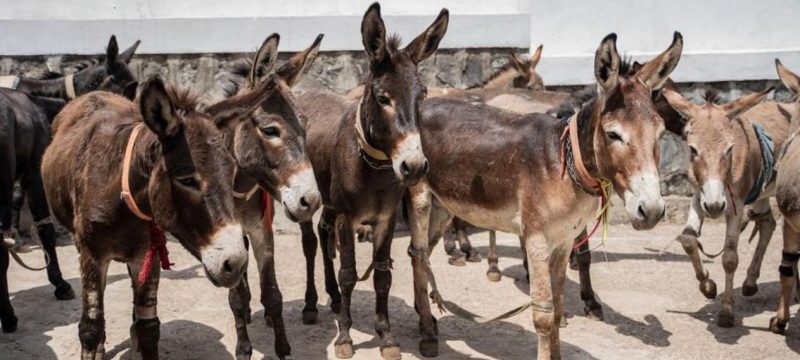
Nearly six million donkeys were slaughtered globally last year to meet the rising demand for traditional Chinese medicine, a UK-based charity revealed on Thursday. This surge has had severe consequences for African communities that depend heavily on the animals.
The increased demand is largely driven by the production of ejiao, a gelatin-like substance believed to offer health benefits. Ejiao is made by extracting collagen from donkey hides and is now a booming $6.8 billion industry in China, according to Chinese research firm Qianzhan.
Read more: Donkey Population Soars by Over 109,000 in One Year
As China’s domestic donkey population has plummeted from about 11 million in 1992 to just 1.5 million by 2023, the country has turned to African nations to fill the gap. In response, the African Union placed a 15-year ban on donkey slaughter in 2023 to protect the species.
The Donkey Sanctuary, a UK charity, reported that the ejiao trade is fueling a massive global market in donkey skins—much of it operating illegally. Their data shows that approximately 5.9 million donkeys were killed last year alone, and projections suggest the trade will require 6.8 million hides annually by 2027.
With the animals becoming more valuable, they are increasingly targeted by criminal groups. These networks, often complex and organized, exploit poor communities and use pressure tactics to acquire donkeys at unfair prices or through theft.
The report noted that illegal slaughter often occurs under inhumane, unregulated, and unsanitary conditions, with many donkeys dying before reaching any facility.
This trade is deeply affecting rural communities—especially women and children—who rely on donkeys for farming, transportation, and daily survival.
The charity also raised public health concerns, warning that the mishandling and unsafe transport of raw hides, along with improper carcass disposal, could trigger infectious disease outbreaks and severely impact local environments.