


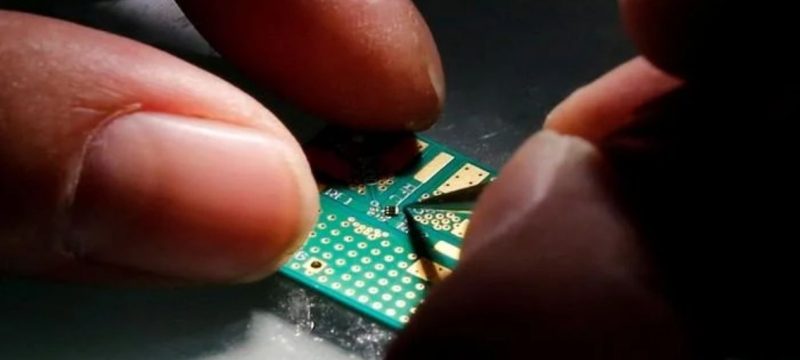
Chinese researchers have made a breakthrough in electronics by developing ultrathin fibre chips capable of computing and communicating. These tiny fibres can be woven into fabrics, wearable devices, and high-tech equipment.
The innovation represents a major shift from traditional rigid silicon chips. Unlike conventional chips, these fibre chips are fully flexible and stretchable, opening doors for advanced wearable technology, medical devices, and human-machine interfaces.
The research was led by Peng Huisheng from Fudan University in Shanghai and the Chinese Academy of Sciences. The team spent nearly a decade integrating processing, memory, and signal-handling circuits into fibres thinner than a human hair. These fibres achieve a density of around 100,000 transistors per centimetre, matching the performance of standard chips.
What makes the design remarkable is its multilayered architecture, which embeds circuitry throughout the fibre rather than just on the surface. This allows the use of smooth polymer substrates that can be twisted, spiraled, and stretched into complex shapes. Laboratory tests confirmed that the fibre chips can perform digital and analog signal processing, as well as neural computing functions.
The fibres are highly durable. They can stretch up to 30%, twist 180 degrees per centimetre, and remain operational even after more than 100 washing cycles. They also withstand temperatures of up to 100 degrees Celsius and can support extreme weights in stress tests.
Another key feature is the integration of power supply, sensing, computing, and display capabilities into a single fibre. This reduces the need for external chips in smart textiles and other flexible electronics, making wearable devices more practical and lightweight.
In other news read more about: Italy Moves to Legalize Chemical Castration for Rapists and Pedophiles
Experts say this development could revolutionize electronics, providing a pathway for clothing, medical monitoring devices, and flexible screens that were previously impossible. The successful creation of these fibre chips demonstrates China’s growing leadership in next-generation computing technology.