


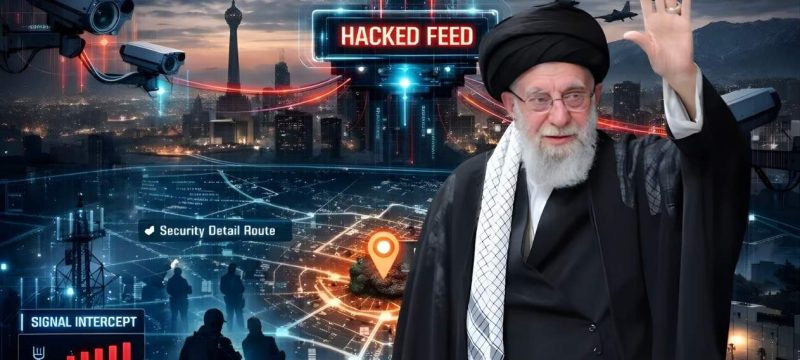
The death of Iran’s Supreme Leader Ayatollah Khamenei has sent shockwaves across the Islamic world. His reported assassination has raised serious questions about how the operation was planned and executed.
Several international reports have suggested that the attack may have followed a long-running cyber operation. According to a report cited by the Financial Times, Tehran’s surveillance systems were allegedly hacked over several years. The operation reportedly turned parts of the Iranian capital into a major source of intelligence.
The report claims that traffic cameras across Tehran were secretly compromised. Video feeds were allegedly redirected to foreign servers. This allowed operatives to closely study daily routines and security patterns linked to Ayatollah Khamenei and other senior officials.
Sources mentioned in the report say the data was analyzed using advanced algorithms. These systems reportedly built detailed “patterns of life” for members of the protection team. Information such as travel routes, work schedules, and frequent locations was mapped out. This level of detail could provide deep insight into movements that are usually kept confidential.
The report also alleges that mobile phone networks near Pasteur Street were disrupted at key moments. This area houses important government offices. Disrupting communications may have delayed warnings to security personnel. Such actions, if confirmed, could have created a tactical advantage before the strike.
Officials quoted in the report claimed their understanding of conditions in Tehran became highly detailed. Some even compared it to having local-level knowledge of their own cities. This intelligence reportedly helped confirm the presence of high-ranking officials before the attack.
However, these claims remain contested. Iranian authorities have not publicly confirmed the full details of how Ayatollah Khamenei was targeted. Analysts say modern conflicts increasingly involve cyber tools and digital surveillance. Intelligence gathering is no longer limited to traditional methods.
The reported targeting of Ayatollah Khamenei highlights how technology now plays a central role in global security. Cyber operations, data analysis, and digital infrastructure have become part of modern warfare.
In other news read more about: National CERT Issues Cyber Alert Amid Rising Regional Tensions
As investigations continue, more clarity may emerge about the events leading up to his death. For now, the reports underline the growing influence of cyber intelligence in shaping geopolitical outcomes.