


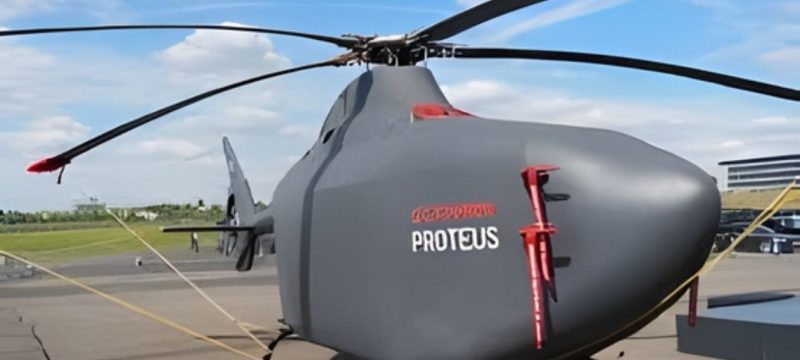
The British Royal Navy has unveiled a new unmanned helicopter aimed at improving maritime surveillance. The drone, named “Proteus,” completed its first test flight successfully, marking a major milestone in naval operations.
Proteus is specifically designed for naval patrols and monitoring underwater threats. The autonomous helicopter can track potential dangers without putting personnel at risk, providing advanced security for naval missions.
Developed by defence and aerospace firm Leonardo, the project reportedly cost $80 million. Royal Navy officials highlighted that the helicopter will play a key role in protecting the seas and responding to threats quickly and efficiently.
The unmanned helicopter is part of a broader effort to modernize naval technology. It combines aerial and defence capabilities, allowing the navy to monitor large areas with precision. The system can operate in high-risk zones without endangering crew members.
Global navies are increasingly turning to unmanned systems for surveillance and defence. Such technologies extend operational reach, reduce risk, and maintain effectiveness in complex missions. Proteus is the latest example of this trend, offering state-of-the-art monitoring and reconnaissance capabilities.
The Royal Navy confirmed that Proteus will be deployed for various maritime tasks, including patrolling strategic waters and detecting underwater threats. Officials stated that the drone will enhance both safety and efficiency in naval operations.
Experts say unmanned helicopters like Proteus are the future of naval surveillance. They provide long-duration monitoring, real-time intelligence, and faster response times, which are crucial for modern maritime security.
The successful test flight of Proteus demonstrates the navy’s commitment to adopting advanced technologies. It also reflects a growing shift toward autonomous systems in military operations worldwide.
In other news read more about: India Pushes Ahead with 100+ Rafale Jets After May 2025 Setback Against Pakistan
As Proteus enters active service, it is expected to strengthen the Royal Navy’s surveillance capabilities, protect national interests at sea, and reduce risks to human crews during critical missions.