


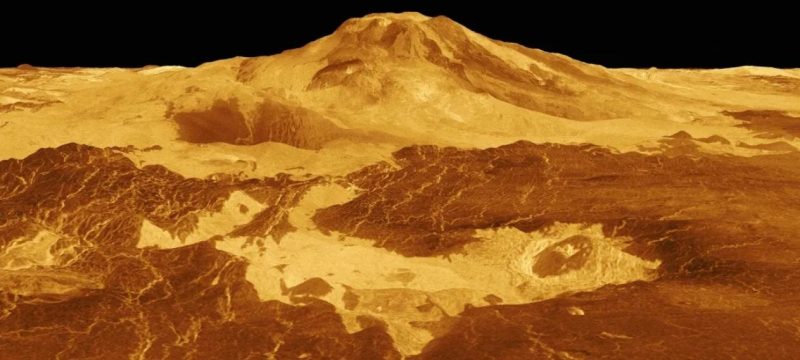
Venus, February 17, 2026 – Scientists have uncovered the first evidence of enormous underground tunnels beneath Venus, confirming theories about the planet’s volcanic activity.
A research team from the University of Trento identified a potential lava tube near the Nux Mons volcano. This marks the first detection of a subsurface feature on Earth’s “evil twin.” The discovery, published in Nature, was made by reanalyzing radar data collected by NASA’s Magellan mission between 1990 and 1992. Scientists looked for signs of localized surface collapses and found a colossal underground cavity.
The tunnel is nearly 0.6 miles (1 kilometer) wide, making it larger than similar structures found on Earth or Mars. The roof is estimated at 490 feet thick, while the internal cavern rises at least 375 meters. Such a massive formation highlights Venus’s intense volcanic history.
According to co-author Lorenzo Bruzzone, the discovery validates long-standing theories about Venus’s underground activity. “The identification of a volcanic cavity allows us to confirm structures that scientists have hypothesized for years,” he said. Venus’s dense, toxic atmosphere had previously prevented direct observation of subsurface features.
Lava tubes form when low-viscosity lava flows beneath a hardened crust, eventually draining and leaving hollow tunnels. Scientists believe this large tube may indicate an extensive network hidden under Venus’s crust. These structures could provide valuable insight into the planet’s volcanic processes and geological evolution.
In other news read more about Scientists Develop Laser Charging System to Keep Drones Flying
The discovery also lays the groundwork for future exploration. NASA’s VERITAS and ESA’s EnVision missions, launching in 2031, will use advanced radar technology to map these tunnels in greater detail. Scientists hope these missions will reveal the full extent of Venus’s volcanic underworld, offering clues about its past and potential habitability.