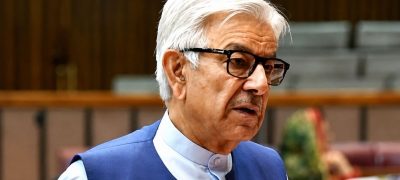


Islamabad, March 25, 2026: Speaking at a webinar hosted by students of a business school in Islamabad, Mubashir Akram, Country Director, ACT Alliance Pakistan, said that illegal trade has grown into a major economic and governance challenge for Pakistan and that the tobacco sector remains one of the clearest and most damaging examples of the country’s shadow economy.
Addressing the group, Akram said the issue must be viewed not merely as tax loss, but as a structural threat to lawful business, public finance, and state credibility. He noted that senior tax officials and public reporting have repeatedly placed annual tax evasion in the tobacco sector at around Rs. 400 billion, while the wider illegal commercial footprint may be far larger once undeclared production, transport, warehousing, counterfeit inputs, and retail distribution are taken into account.
“The tobacco sector shows how illegal trade can distort an entire market,” said Akram. “When non-compliant products openly compete at retail, the state loses revenue, lawful businesses lose ground, and public policy loses effectiveness.”
He said recent government enforcement actions deserve appreciation, particularly large seizures of non-duty-paid tobacco and cigarette-making materials, as well as efforts to strengthen upstream monitoring and expand seizure powers.
“The government has demonstrated that when it acts with intent, the illegal supply chain can be disrupted,” he said. “These actions deserve recognition. But disruption alone is not enough. Pakistan now needs constant, year-round enforcement that makes illegal trade costly every week, not only during periodic crackdowns.”
Akram observed that the tobacco market has become an enforcement test case because the level of visible non-compliance at the retail shelf is so high. Referring to recent market reporting, he noted that hundreds of cigarette brands remain available in the market while only a small number fully meet track-and-trace and other legal requirements. He warned that in such conditions, tax increases without market control can push consumers toward untaxed and unlawful supply.
He called on universities and research institutions to treat the illegal economy as a serious area of academic inquiry. “Academia in Pakistan must speak more openly and more rigorously about the illegal economy,” he said. “This is not a side issue. Across sectors, illegal trade drains trillions of rupees from the national economy, weakens institutions, and rewards non-compliance. Universities should help produce evidence, policy research, and informed debate that can strengthen enforcement and governance.”
He also stressed that the problem cannot be solved by the government alone. “A durable response will require collaboration between the civil society, media, academia, and the government,” Akram said. “Civil society can mobilize awareness, the media can sustain scrutiny, universities can generate research, and the state can enforce the law. These efforts must reinforce each other if Pakistan is to reduce the space available to illegal networks.”
Concluding his address, Akram said Pakistan should adopt a permanent anti-illegal-trade model centered on retail compliance, input controls, cross-agency coordination, and institutional integrity. He added that protecting the legal economy is essential not only for revenue collection but also for restoring public confidence in the rule of law.