

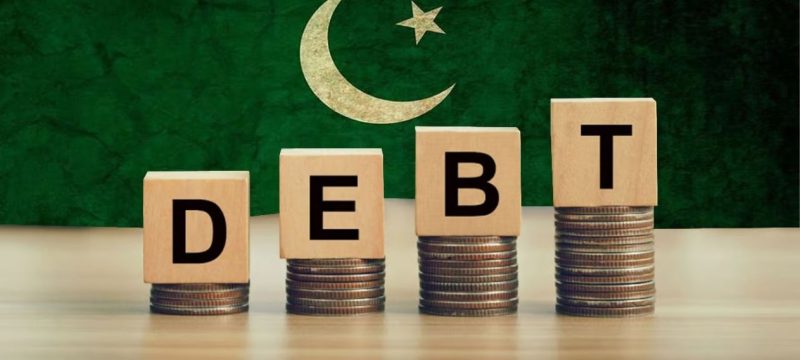
The federal government of Pakistan has recorded a significant increase in borrowing during the first eight months of the fiscal year 2025–26. Official data shows that total borrowing rose by 18%, reflecting the country’s growing financial needs.
According to officials, Pakistan secured a total of $6.86 billion in loans from various sources. These include the International Monetary Fund (IMF) and other international lenders. Out of this, $5.86 billion came as external financing during the July to February period.
The data also reveals that $5.76 billion was received as new loans. In addition, $92.2 million was provided in the form of grants. This represents an increase of around $910 million compared to the same period in the previous fiscal year.
A major contribution came from the IMF, which provided a $1 billion tranche. This brought the total inflow close to $6.76 billion. In local currency terms, Pakistan borrowed around Rs1,904 billion. This means the country borrowed an average of Rs7.86 billion per day during the period.
Friendly countries also played an important role. Saudi Arabia rolled over $3 billion in loans, while China extended a rollover of $1 billion. These rollovers helped ease immediate repayment pressures.
International financial institutions contributed $2.37 billion in funding. Meanwhile, $1.76 billion was raised through Naya Pakistan Certificates. These instruments continue to attract overseas Pakistanis looking to invest in the country.
The World Bank provided $722 million, while the Asian Development Bank (ADB) extended $660 million. The Islamic Development Bank offered over $480 million in short-term financing. Additionally, the International Bank for Reconstruction and Development (IBRD) provided more than $350 million.
Further support came from allied nations. Saudi Arabia provided $810 million, including a small grant component. It also supplied oil worth $800 million on deferred payment terms. China contributed $270 million in loans along with $72.2 million in grants.
In other news read more about: Tobacco Shadow Economy Requires Permanent Enforcement Model: ACT Alliance
The increase in borrowing highlights ongoing economic challenges for Pakistan. At the same time, it reflects continued support from international partners. Analysts say that managing debt levels and improving economic stability will remain key priorities for the government in the coming months.