

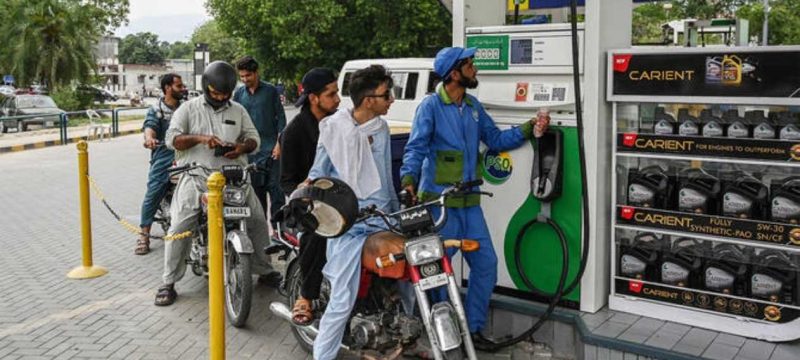
Pakistan’s federal government is preparing to increase petrol and diesel prices within the coming days as rising global oil import costs put pressure on national finances. The move is part of a broader strategy to gradually shift fuel price adjustments to consumers while maintaining targeted relief for vulnerable groups.
The decision followed a high-level meeting chaired by Finance Minister Muhammad Aurangzeb, attended by all four provincial chief ministers and senior federal officials. Discussions focused on creating a coordinated fuel-subsidy framework designed to protect motorcyclists, farmers, and low-income households from the full impact of price increases.
According to reports, petrol and diesel prices are expected to rise soon, although the final adjustment will depend on international oil market trends. Authorities are considering passing the full increase in petrol costs to consumers while transferring only part of the diesel price gap to limit inflationary pressure.
Government estimates suggest that petrol prices currently remain about Rs.100 per litre below import-adjusted costs, while diesel prices are more than Rs.200 per litre lower. Officials are reviewing updated calculations prepared by the Petroleum Division and the Oil and Gas Regulatory Authority before announcing the final revision.
Over the past three weeks, the federal government has already absorbed approximately Rs.129 billion in fuel subsidies. Officials now plan to cap total support at around Rs.158 billion, prompting Islamabad to request provincial governments to share the financial burden under a coordinated subsidy arrangement.
Following consultations between President Asif Ali Zardari and Prime Minister Shehbaz Sharif, provinces agreed in principle to participate. Punjab and Sindh are expected to contribute based on population shares under the National Finance Commission formula, while Khyber Pakhtunkhwa and Balochistan will contribute according to fuel consumption levels.
Provincial administrations are also preparing targeted relief programs. Sindh plans to provide diesel subsidies to farmers through its Hari Card database, while Punjab and Khyber Pakhtunkhwa are designing similar initiatives. A nationwide mechanism for subsidized petrol for motorcyclists is expected to be announced soon.
Officials remain concerned that higher diesel prices could significantly increase transport costs, which may quickly translate into higher food prices due to rising freight charges. To limit public impact, provinces have agreed not to increase fares for Bus Rapid Transit systems, though authorities warn this could create fare differences between urban and non-urban transport services.
Targeted subsidies are estimated to cost between Rs.15 billion and Rs.18 billion per week, potentially rising to Rs.30 billion if global oil prices continue climbing. Policymakers believe the financial burden can be jointly managed until the fiscal year ends in June, although volatility in international energy markets remains a major uncertainty.
The meeting concluded with consensus on developing a long-term petroleum pricing reform framework aimed at reducing fiscal pressure while controlling inflation and ensuring support reaches the most affected segments of society.
Also read: Pakistan Government Imposes Countrywide Smart Lockdown