


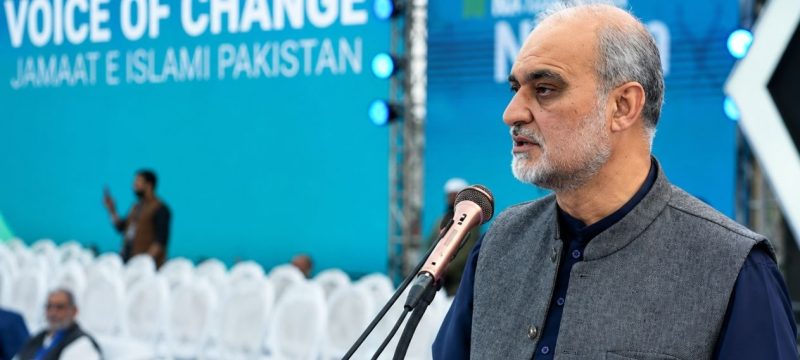
Jamaat-e-Islami (JI) Amir Hafiz Naeemur Rehman has urged the government to fix the Petrol Price at Rs225 per litre for the next three years. He said the move would provide much-needed relief to people struggling with rising living costs.
Speaking to journalists in Karachi on Monday, Hafiz Naeem criticized the government’s economic policies and claimed that ordinary citizens have not received meaningful support during the ongoing inflationary period.
He said the current Petrol Price continues to place financial pressure on households and businesses. According to him, stabilizing fuel costs for a longer period could help reduce the burden on consumers and improve economic conditions.
Hafiz Naeem argued that inflation has affected people across the country, especially low-income families. He said many citizens are finding it difficult to manage daily expenses due to higher costs of transportation, food, and essential services.
During his media interaction, the JI chief also raised concerns about the lack of employment opportunities and public services in Sindh. He stated that many people are struggling to find jobs despite increasing economic challenges.
He questioned why children living in rural parts of Sindh continue to face difficulties in accessing quality education and healthcare facilities. He said these issues require urgent attention from the government.
Hafiz Naeem further highlighted transportation problems in Karachi. He claimed that residents of the city do not have access to adequate government-run public transport services. According to him, improved transportation infrastructure is necessary to meet the needs of the growing population.
Discussing national political matters, he also commented on the situation in Gilgit-Baltistan. He alleged that public funds were being used for political purposes in the region. His remarks added a political dimension to his broader criticism of the government.
The demand to fix the Petrol Price at Rs225 per litre comes at a time when fuel costs remain a major concern for consumers. Fuel prices affect transportation costs, business operations, and the prices of everyday goods.
Economic experts note that changes in global oil markets, exchange rates, and government taxation policies all influence fuel prices in Pakistan. Any decision regarding fuel pricing would require careful consideration of these factors.
Hafiz Naeem’s proposal is likely to spark debate among policymakers, economists, and the public. Supporters believe lower fuel prices could provide immediate relief, while others argue that broader economic conditions must also be considered.
In other news read more about: Metro Bus Service Temporarily Suspended for Muharram Procession
As discussions continue, fuel costs remain one of the most closely watched economic issues for millions of Pakistanis.