


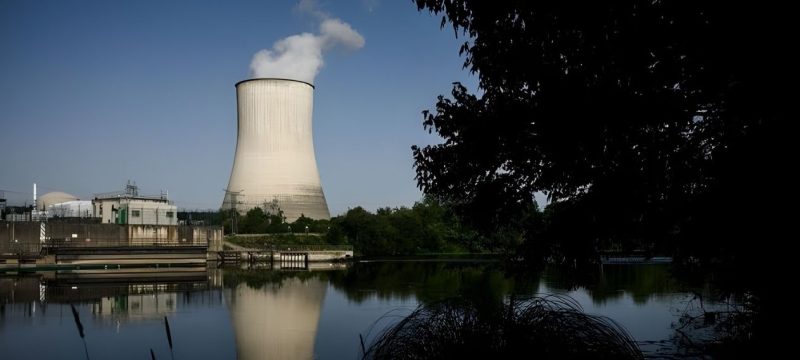
France has temporarily shut down three nuclear reactors after rising river temperatures created environmental concerns during another intense summer heatwave. The decision was announced by EDF, the country’s state-owned energy company, which also warned that seven more reactors could soon operate at reduced capacity if temperatures continue to rise.
According to EDF, the affected reactors include Unit 2 at the Golfech nuclear plant on the Garonne River, Unit 3 at the Bugey plant on the Rhône River, and Unit 2 at the Chooz plant on the Meuse River. Together, these reactors account for around six percent of France’s total nuclear electricity generation capacity.
Despite the shutdowns, the country’s electricity grid remains stable. National grid operator RTE confirmed that power supplies are secure and that there is currently no risk of electricity shortages.
The reactors were not shut down because of technical or safety problems. Instead, the move was made to comply with environmental regulations that limit the temperature of water released back into rivers after it is used to cool nuclear reactors.
As Europe experiences its third major heatwave of the year, river temperatures have increased significantly. At some locations, water temperatures have approached 28 degrees Celsius. Releasing additional heated water into already warm rivers could harm fish and other aquatic life.
An EDF spokesperson said the reactors themselves remain safe to operate even during high temperatures. The company explained that the shutdowns were taken solely to protect the environment and meet regulatory requirements.
This is the second time in recent weeks that France has reduced nuclear power production because of extreme weather. Earlier this summer, EDF also suspended reactor operations during a record-breaking June heatwave that brought the highest temperatures recorded in decades.
The latest weather forecasts show that more than one-third of France remains under the country’s highest heat alert. Temperatures in several regions are expected to reach as high as 41 degrees Celsius in the coming days.
EDF has provided estimated restart dates for the affected reactors if weather conditions improve. Bugey’s reactor is expected to return to service around July 19, Golfech around July 22, and Chooz around July 25. However, the company noted that these dates may change depending on future temperatures.
Climate change is becoming an increasing challenge for nuclear power generation across Europe. EDF estimates that current climate-related restrictions reduce annual nuclear electricity production by about 0.3 percent.
The company believes this impact could increase to approximately 1.5 percent by 2050 if no major adaptation measures are introduced. Higher temperatures and more frequent heatwaves are expected to place additional pressure on cooling systems and environmental regulations.
To prepare for future climate conditions, EDF plans to invest €8.7 billion by 2040 to strengthen its nuclear and hydroelectric facilities. The investment aims to improve resilience against rising temperatures and changing weather patterns.
In other news read more about FIFA World Cup 2026: Spain Defeat Belgium 2-1 to Set Up Semi-Final Clash with France
The latest reactor shutdowns highlight how climate change is affecting energy production in France. While electricity supplies remain stable, the country continues to balance reliable power generation with the protection of rivers and surrounding ecosystems.