

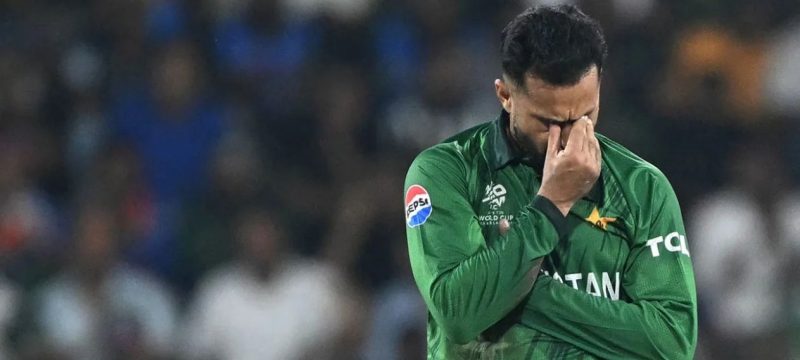
Pakistan all-rounder Mohammad Nawaz has been suspended by the International Cricket Council (ICC) for breaching the ICC Anti-Doping Code. The governing body announced a three-month ban, which could be reduced to one month if the player successfully completes an approved rehabilitation programme.
The ICC confirmed that Mohammad Nawaz, 32, tested positive for Carboxy-THC during a doping test conducted after Pakistan’s ICC Men’s T20 World Cup 2026 match against the Netherlands. The fixture was played in Colombo, Sri Lanka, on February 7.
According to the ICC, Carboxy-THC is classified as a “Substance of Abuse” under the ICC Anti-Doping Code. The governing body said the player accepted responsibility for the anti-doping rule violation.
In its official statement, the ICC said Mohammad Nawaz demonstrated that the prohibited substance was consumed outside competition. The organization also noted that the substance was not used to improve sporting performance.
Based on these findings, the ICC imposed a three-month period of ineligibility. The suspension has been backdated to May 1, 2026, the date when the player voluntarily accepted a provisional suspension.
The ICC further explained that the ban could be shortened to one month if Mohammad Nawaz successfully completes an ICC-approved Substance of Abuse rehabilitation programme. This provision is available under the anti-doping regulations for certain cases involving substances of abuse.
Since the suspension was backdated, the player has already served approximately two and a half months during his provisional suspension. As a result, the ICC has now lifted the provisional suspension.
If the rehabilitation programme is completed successfully, the remaining portion of the three-month sanction will not need to be served. This means the player could become eligible to return to cricket sooner than initially expected.
The ICC also confirmed that all of Mohammad Nawaz’s results from Pakistan’s T20 World Cup match against the Netherlands have been disqualified. In addition, every match played before the provisional suspension began on May 1 has also been disqualified under the ICC Anti-Doping Code.
The anti-doping regulations allow reduced sanctions when athletes prove that a prohibited substance was used outside competition and was not intended to enhance athletic performance. However, such reductions are only granted if the athlete completes an approved treatment and rehabilitation programme.
The ICC said these rules are designed to maintain fairness in international cricket while encouraging rehabilitation in cases involving substances of abuse rather than performance-enhancing drugs.
The latest decision means Mohammad Nawaz must complete the required rehabilitation process before becoming eligible for a full return to international cricket. The ICC has not announced any additional disciplinary action beyond the conditions outlined in its official statement.
In other news read more about Pakistan Players to Play Padel as Part of Training Camps, Says Aaqib Javed
The case highlights the importance of compliance with the ICC Anti-Doping Code, which applies to all international cricketers. The governing body continues to enforce its anti-doping regulations to protect the integrity of the sport while allowing reduced sanctions in cases that meet the required legal and medical conditions.