


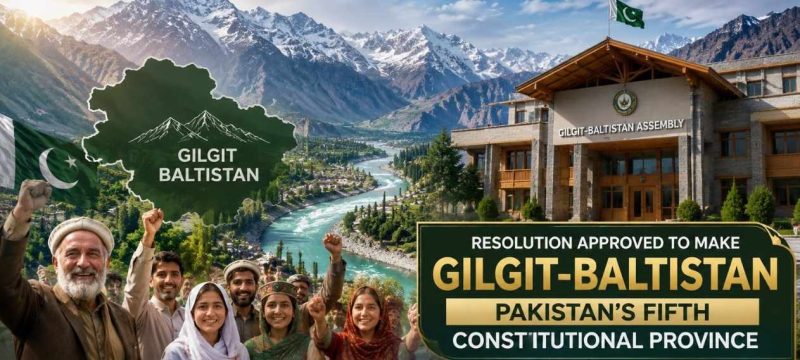
A resolution has been approved to grant Gilgit-Baltistan the status of Pakistan’s fifth constitutional province. The proposal marks an important step in efforts to provide the region with greater constitutional recognition, stronger political representation, and expanded administrative rights.
The move has attracted attention across the country and is expected to lead to further discussions among political leaders, lawmakers, and constitutional experts. Any change to the constitutional status of the region will require legal and parliamentary procedures before it can be formally implemented.
Supporters of the proposal believe provincial status would help strengthen governance and improve public administration in Gilgit-Baltistan. They also argue that it would provide the region with a greater voice in national decision-making and ensure stronger representation in Pakistan’s constitutional framework.
For many years, residents and political groups in the region have called for increased constitutional rights. They believe that becoming a constitutional province would help address long-standing concerns related to governance, development, and political participation.
The approved resolution reflects ongoing efforts to give the region a more defined role within Pakistan’s federal system. Supporters say the move could improve coordination between the federal government and local institutions while creating a clearer administrative structure.
Another key argument in favor of the proposal is the potential for faster development. Provincial status could help accelerate infrastructure projects, improve public services, and strengthen investment in sectors such as education, healthcare, tourism, and transportation.
The region is widely known for its breathtaking mountains, glaciers, and natural beauty. It also holds strategic importance because of its geographical location and its role in regional connectivity and trade.
Advocates believe greater constitutional recognition would help unlock the region’s economic potential. Improved governance and stronger institutions could encourage investment, create employment opportunities, and support sustainable development.
Despite the approval of the resolution, constitutional experts note that additional legal steps remain necessary before any formal change can take place. Relevant institutions and political stakeholders are expected to examine the proposal in detail and discuss its constitutional implications.
The issue is likely to remain part of the national political agenda as consultations continue among lawmakers and government officials. Parliamentary debate and constitutional amendments may be required before the proposal can move forward.
Observers believe any decision regarding Gilgit-Baltistan should follow the country’s constitutional process while ensuring that the interests of local residents are fully considered. They also stress the importance of building political consensus on such an important national issue.
Supporters argue that granting provincial status could strengthen democratic institutions and improve administrative efficiency. They believe it would also help deliver better public services and create new opportunities for economic growth.
The proposal has reopened discussion about the future constitutional position of Gilgit-Baltistan within Pakistan. While the resolution represents an important political development, the final outcome will depend on future legal and constitutional proceedings.
In other news read more about: CM Maryam Nawaz Orders Province-Wide Launch of Sanjhi Sabzi Project
If implemented, the move could mark a significant milestone in the region’s history by expanding its constitutional rights, enhancing political representation, and strengthening its role in Pakistan’s national framework.