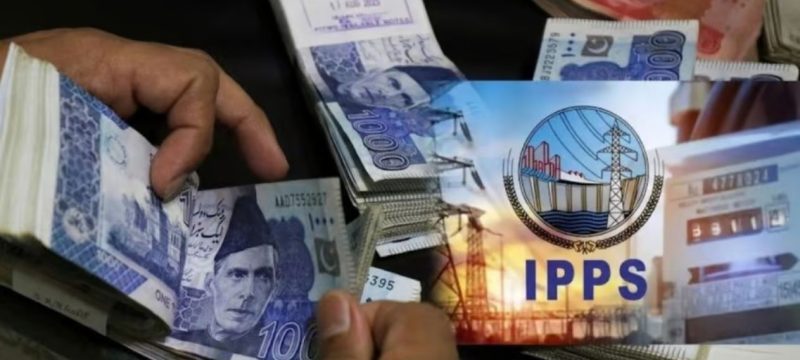
ISLAMABAD: Pakistan paid Rs13.397 trillion to Independent Power Producers (IPPs) over the past five years, according to official data. The figures show that billions of rupees were paid to power plants even when they did not generate electricity.
The data highlights the financial impact of the country’s capacity payment system. Under this mechanism, many power producers receive guaranteed payments for keeping their plants available, regardless of whether electricity is produced.
According to the official figures, around 70 percent of the money collected through electricity bills in Pakistan is transferred to IPPs. These contractual payments have become one of the main reasons behind rising electricity tariffs.
Out of the total Rs13.397 trillion paid to IPPs, only Rs7.275 trillion was spent on electricity supplied to the national grid. The remaining amount mainly covered capacity payments and other fixed contractual charges.
The data also shows that several power plants received payments despite remaining idle during the period. These guaranteed payments continued under existing long-term agreements signed with the government.
Officials noted that electricity generation costs have gradually declined in recent years. However, consumers have not fully benefited from this trend because capacity payments have continued to increase.
As a result, electricity prices in Pakistan have remained high despite lower generation costs. Households and businesses continue to bear the burden of expensive electricity bills.
The capacity payment system has become one of the most debated issues in the country’s energy sector. Critics argue that fixed payments increase the financial burden on consumers while limiting the benefits of lower production costs.
So far, the government has not announced a comprehensive reform of the existing capacity payment mechanism. The current framework remains in place under long-term contractual agreements.
Pakistan currently has around 90 to 100 operational Independent Power Producers. These companies operate under Power Purchase Agreements (PPAs) signed with the government through the Central Power Purchasing Agency (CPPA-G).
These agreements guarantee fixed capacity payments to many producers. As a result, companies receive payments even when their electricity is not dispatched to the national grid.
Some of the country’s major IPPs include Hub Power Company (HUBCO), Nishat Power, Nishat Chunian Power, Engro Powergen, Lalpir Power, Pak Gen, Atlas Power, Attock Gen, Orient Power, Saif Power, Sapphire Electric, and Halmore Power.
Other large projects include China Power Hub Generation, Port Qasim Electric Power, Huaneng Shandong Ruyi’s Sahiwal coal plant, Shanghai Electric’s Thar project, Lucky Electric, Kot Addu Power Company (KAPCO), Kohinoor Energy, Rousch Power, Saba Power, Foundation Power, and several wind and solar projects.
The sector includes investments from local business groups as well as foreign companies, particularly Chinese firms. Some projects have also been linked to politically connected business interests through their ownership structures.
In other news read more about LESCO Cuts Financial Gap by Rs58 Billion Through Major Power Sector Reforms
The latest figures have once again drawn attention to the challenges facing Pakistan’s energy sector. Analysts believe future reforms could play an important role in reducing electricity costs and easing the financial burden on consumers.