

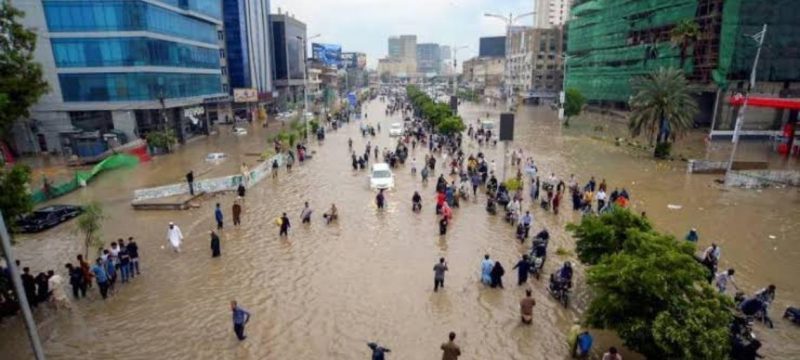
LAHORE: Blocked culverts and poor infrastructure worsened recent flooding across Lahore and Gujranwala divisions.
An internal report by the Punjab Irrigation Department identified several factors behind the flooding. These included overflowing drains, poor planning, and unauthorized cuts.
Heavy monsoon rains affected the region between July 25 and August 1. The rainfall inundated nearly 2,729 square kilometers.
Around 1,449 square kilometers were affected between July 25 and July 27. The flooding impacted both urban and rural communities across several districts.
The Gujranwala irrigation zone recorded exceptionally high rainfall during the monsoon period. It includes parts of Sheikhupura district.
The area received an average rainfall of 579 millimeters. Its normal monsoon average stands at around 240 millimeters.
The worst-affected areas included Ferozwala and Muridke in Sheikhupura. Several areas of Sialkot, Narowal, Zafarwal, Sambrial, Daska, and Gujranwala were also affected.
The report said rainfall produced flood flows beyond the capacity of several drains. This caused overtopping, breaches, and widespread flooding.
The Dek Diversion Channel recorded a peak flow of 50,350 cusecs. Its designed capacity is only 35,200 cusecs.
The report also recorded overflow at 99 drains. These drains overflowed at 131 vulnerable locations and caused several breaches.
Poorly planned development along natural waterways was another major concern. Construction around nullahs and drains restricted the movement of floodwater.
The report highlighted the closure of older culverts as a key issue. Many culverts were originally built to allow rainwater to pass beneath roads and railway lines.
Hundreds of such structures were constructed during the British colonial period. Many were later closed as urban areas expanded.
The growth of cities and rising populations increased pressure on drainage systems. This contributed to the problem of Urban Flooding during heavy rainfall.
Local residents also made unauthorized cuts at several locations. These cuts were intended to divert accumulated rainwater into nearby drains.
However, many drains were already carrying flows above their designed capacity. The additional water increased pressure on the drainage network.
Sheikhupura Deputy Commissioner Rana Adeel Tassawur supported the report’s findings. He said unauthorized cuts contributed to flooding in Ferozwala and Muridke.
He also pointed to poor urban planning and closed culverts. According to him, these factors delayed the natural drainage of rainwater.
Some culverts under motorways and railway infrastructure had also been closed. Local residents, including farmers, were reportedly involved in some closures.
Authorities later reopened some of these drainage routes. Floodwater had nearly reached the Lahore-Sialkot Motorway at certain locations.
The deputy commissioner proposed new embankments for low-lying areas. Pathan Colony and other vulnerable locations in Ferozwala were among the proposed areas.
The Irrigation Department recommended a detailed study for long-term solutions. The study would examine flood flows through nullahs and the wider drainage network.
The department also proposed converting existing drainage systems into seepage-cum-stormwater drains. Such measures could improve drainage during future heavy rainfall.
The findings highlight how infrastructure problems can increase the impact of Urban Flooding. Better planning and improved drainage capacity could help reduce future risks.
In other news read more about PDMA Warns Of Flash, Urban Flooding As Fourth Monsoon Spell Continues
Authorities are now considering long-term measures to improve flood management. These steps could strengthen the drainage system across vulnerable areas of Punjab.