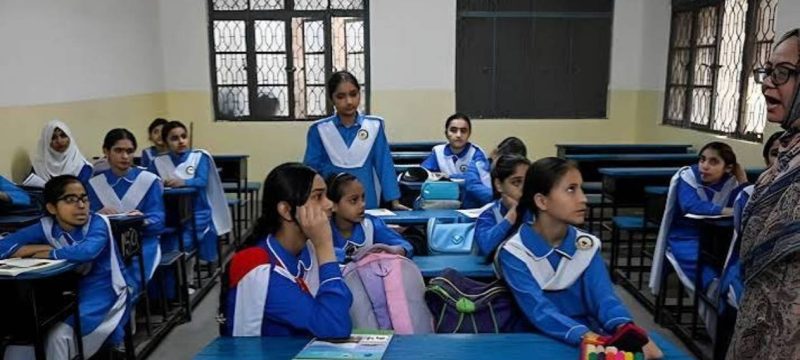
LAHORE: The Punjab government has started reviewing government middle and high schools with very low enrollment.
The review aims to assess teaching staff and the use of public education resources. Officials are examining schools where student numbers remain critically low.
The School Education Department has instructed district authorities to verify low-enrollment schools. The review will focus on classes with fewer than 20 students.
Officials may take several steps after completing the assessment. Teachers could be transferred from schools with low enrollment to busier institutions.
Authorities may also merge or reorganize schools where required. These measures are being considered under the New Policy for better resource management.
The government’s move comes amid concerns over weak academic performance in Punjab. Class 9 examination results have also raised concerns among education stakeholders.
According to available figures, 1,395,475 students appeared in the annual Class 9 examinations. The examinations were conducted by Punjab’s nine education boards.
Out of these students, 641,662 candidates passed their examinations. Meanwhile, 753,813 students failed to pass.
The overall pass rate stood at 45.98%. The results have increased concerns about the quality of education in public schools.
Education experts have identified several possible reasons behind the poor results. These include teacher shortages and inadequate school facilities.
Weak foundational learning has also been highlighted as a major concern. Irregular attendance and limited academic support are other reported challenges.
Punjab Teachers Union Secretary General Rana Liaqat Ali has also commented on the situation. He called for improvements in public schools instead of privatization.
The province is also facing a serious out-of-school children crisis. Recent estimates suggest that six to seven million children remain outside classrooms.
Several factors contribute to the problem. Poverty, child labor and early marriages continue to affect children’s access to education.
Long travel distances can also prevent children from attending schools regularly. Inadequate facilities and financial difficulties create further barriers.
Education experts have urged the government to address these issues alongside school restructuring. They have called for stronger teacher recruitment and better infrastructure.
Experts have also recommended improvements in curriculum implementation and assessment methods. These measures could help improve learning outcomes across public schools.
The New Policy could change how teaching resources are distributed across low and high-enrollment schools. Authorities will determine the required changes after completing their review.
The government’s assessment is expected to provide a clearer picture of enrollment patterns. It may also help identify schools requiring additional support.
Officials will then decide whether staff transfers, school mergers or reorganizations are necessary. The New Policy is aimed at making better use of available resources.
At the same time, experts stress that improving education requires broader reforms. Better facilities, qualified teachers and stronger academic support remain important priorities.
In other news read more about Daanish Schools Announce 265 Jobs for Principals and Teachers
The government’s next steps will depend on the findings of the school review. Further decisions are expected after district authorities complete their assessments.