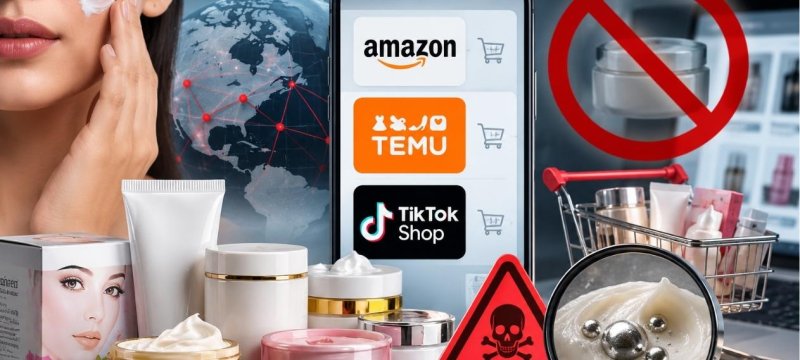
More than 20 skin-lightening products containing mercury remain available through major online marketplaces, according to a Reuters investigation.
The investigation identified products offered through third-party sellers on Amazon, Temu and TikTok Shop.
These Beauty Creams remain available despite international restrictions designed to limit mercury exposure in cosmetics.
The findings highlight difficulties in controlling prohibited products across large international online marketplaces.
Mercury-Containing Products Found Online
The Reuters investigation was published on September 16.
Journalists found mercury-containing skin-lightening products available for purchase in several countries. These included the United States, France, India, the United Arab Emirates and Belgium.
Reporters were able to purchase several products despite marketplace policies restricting prohibited cosmetics.
The investigation found that banned products can return through different seller accounts. Some listings may also use misleading product descriptions, making detection more difficult.
Online platforms host millions of third-party listings, creating challenges for enforcement and monitoring.
Why Is Mercury Used in Beauty Creams?
Mercury can suppress melanin production, which may temporarily create a lighter skin appearance.
However, exposure to mercury can cause serious health problems. Health risks can include kidney damage and harmful effects on the nervous system.
The World Health Organization has warned about mercury in skin-lightening products. It has also noted that these products can remain available online despite restrictions.
The continued availability of such Beauty Creams has therefore raised public health concerns.
International Rules Restrict Mercury Cosmetics
The Minamata Convention on Mercury includes international measures targeting mercury-added cosmetics.
Its rules address the manufacture, import and export of products containing restricted levels of mercury.
Measures have also been strengthened to address mercury-added skin-lightening creams and soaps. International standards historically allowed up to one part per million of mercury in certain cosmetics.
However, efforts have increasingly focused on eliminating mercury-added cosmetics.
Research Highlights Wider Mercury Problem
Recent research suggests the issue extends beyond a small number of marketplace listings.
A 2025 study examined 134 skin-lightening products purchased online across seven Asian countries.
More than 58% reportedly exceeded the permitted mercury concentration.
Some tested products contained particularly high mercury levels.
The findings demonstrate the continuing challenge of regulating skin-lightening products sold through online channels.
FDA Warns Consumers About Skin-Lightening Products
The U.S. Food and Drug Administration has also warned consumers about certain skin-lightening products.
The agency says some products may contain mercury or hydroquinone.
It also states that no over-the-counter skin-lightening products are FDA-approved for legal marketing in the United States.
The continued sale of potentially unsafe Beauty Creams shows the difficulty of enforcing restrictions across borders.
Independent sellers can create new accounts and listings after earlier products are removed.
In other news read more about: New York’s 139-Year-Old Church Converted Into a Mosque
As a result, regulators and marketplaces continue facing challenges in preventing restricted cosmetics from reaching consumers.