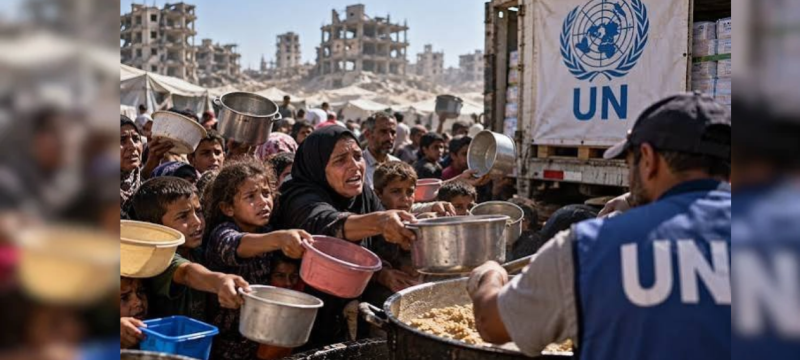
CAIRO/GAZA: The United Nations World Food Programme (WFP) has announced major cuts to its food assistance programme in Gaza due to funding shortages. The decision will leave approximately 500,000 people without monthly food support.
The agency said it would reduce the number of people receiving monthly assistance from 1.6 million to 1.1 million. The cuts come as millions of Palestinians continue to face severe food shortages and difficult living conditions.
According to the WFP, around 1.4 million people, or two-thirds of Gaza’s population, face crisis-level food insecurity or worse. This includes approximately 200,000 people experiencing emergency levels of hunger.
The agency has also reduced food rations by half. Cash assistance has been cut for 75,000 families, further increasing pressure on vulnerable households.
WFP Reduces Food Assistance in Gaza
The WFP has also reduced the number of daily hot meals provided to people who cannot prepare their own food. The number has dropped from 250,000 to 150,000 meals per day.
Some families living in hard-to-reach areas now receive hot meals only every other day. These reductions could make it increasingly difficult for displaced Palestinians to access regular meals.
The funding crisis comes as many families continue living in temporary shelters. Limited access to basic services and inadequate humanitarian supplies have added to their struggles.
The WFP warned that it urgently needs $450 million over the next six months. The funding would help maintain essential operations in Gaza and the Israeli-occupied West Bank.
WFP Official Warns of Harsh Winter Conditions
Carl Skau, the WFP’s acting executive director, described the living conditions in Gaza as extremely difficult. Speaking to Reuters during a visit, he said residents continued to face serious challenges despite the ceasefire agreement.
Skau highlighted the lack of proper shelter, essential services and security. He also warned that the latest aid reductions were happening as another winter approached.
He described previous winters in Gaza as particularly harsh. Many displaced families remain exposed to difficult weather conditions while living in temporary shelters.
Skau urged the international community to increase its support. He stressed that continued funding was necessary to protect existing humanitarian progress and support early recovery efforts.
Gaza Ceasefire Faces Implementation Challenges
A US-brokered ceasefire agreement reached last year included plans for the eventual reconstruction of Gaza. However, limited progress has been made towards implementing the broader agreement.
The deal includes provisions concerning Hamas’s disarmament and the withdrawal of Israeli troops. Meanwhile, Israeli forces continue to control more than 60% of the territory and conduct frequent airstrikes, according to the report.
Hamas maintains control over most areas where more than two million Palestinians live. Many residents remain displaced and depend on humanitarian assistance to meet their basic needs.
Palestinian Families Fear Worsening Hunger
The Hamas-run Gaza government media office described the WFP’s announcement as catastrophic. It warned that further reductions in humanitarian assistance could accelerate famine across the territory.
The office called for increased funding for aid organisations to prevent the situation from deteriorating further.
Palestinian residents have also expressed frustration over their worsening living conditions. Sabrine Kuhail, a displaced woman in central Gaza’s Nuseirat refugee camp, spoke about the difficulties facing her family and others.
She described the prolonged effects of war, destruction, restrictions and continued bloodshed. Her remarks reflected the exhaustion and desperation experienced by many displaced Palestinians.
In other news read more about Naeema Butt Criticises Coke Studio Over Gaza Crisis
The latest funding cuts raise further concerns about food security in Gaza. Without additional financial support, humanitarian organisations may struggle to provide essential assistance to millions of vulnerable residents.