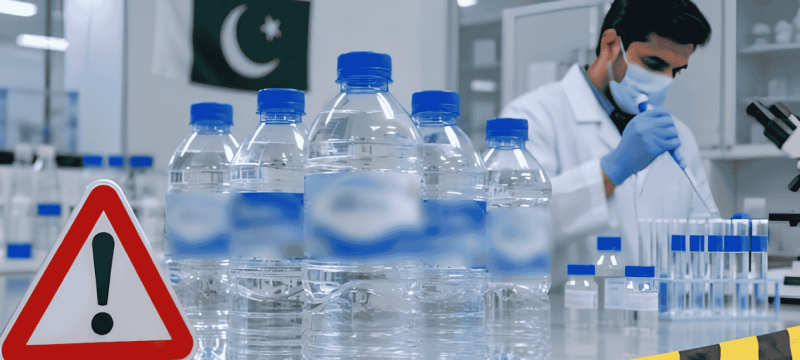
A recent water quality investigation has raised serious concerns about bottled drinking water in Pakistan. Laboratory tests have found 27 bottled water brands unsuitable for human consumption.
The findings revealed excessive levels of arsenic, sodium and other dissolved substances. Several products also contained potentially harmful bacterial contamination.
The results were published in the latest quarterly assessment by the Pakistan Council of Research in Water Resources (PCRWR). The organisation examined 223 bottled drinking water samples collected from 20 cities across Pakistan.
According to the assessment, 195 brands, representing approximately 87 percent of those tested, met the required safety standards. However, 27 brands failed safety tests due to chemical contamination, microbiological issues or both.
List of 27 Bottled Water Brands That Failed Safety Tests
The PCRWR assessment identified the following bottled water brands as unsuitable for consumption:
- Aab-e-Haram
- Imperial Pure Drinking Water
- Aab-e-Makuran
- Water Verse Purified
- Jel Bottled Drinking Water
- Sip Bottled Drinking Water – Malir, Karachi
- Sip Bottled Drinking Water – Shahdara, Lahore
- AB-Blue Water
- HR Water Healthy Life
- Safi Bottled Drinking Water
- Pure Aqua Tech Bottled Drinking Water
- Akwafine Bottled Drinking Water
- Water Time Bottled Drinking Water
- Al Saha Drinking Water
- Aab-e-Hayat
- K&S Aqua Sea
- JERS Safe Life
- Athar Premium
- Aqua Dor
- HHG Sweets and Bakers
- Drinkly
- One Flow Bottled Drinking Water
- Premium Safa Purified Water
- Xalmi / Zalmi Pure Mineral Water
- New A2Z Bottled Water
- Fresh Smart Pure Water
- Aqua Indus
Arsenic Contamination Found in Bottled Water
The laboratory investigation identified chemical and microbiological contamination in several products.
Six brands failed chemical quality checks, while 22 showed microbiological contamination. One brand appeared in both categories, bringing the total to 27 unsafe brands.
One of the major concerns was excessive arsenic in certain bottled water products.
Akwafine Bottled Drinking Water, associated with MKS Beverages in Gujranwala, contained 23.2 parts per billion (ppb) of arsenic. This exceeded the national permissible limit of 10 ppb.
Premium Safa Purified Water from Multan also failed the arsenic test. Its reported concentration reached 13.5 ppb, above the permitted level.
Long-term exposure to arsenic through drinking water can cause serious health problems. These include skin disorders and an increased risk of certain cancers.
Fresh Smart Pure Water also failed the potassium test. Laboratory results showed 20 parts per million (ppm), twice the applicable limit of 10 ppm.
Bacterial Contamination Raises Health Concerns
The PCRWR assessment also identified coliform bacteria in several bottled water products.
Although none of the tested samples contained E. coli, the presence of coliform bacteria raised concerns about possible contamination.
Such contamination can occur during water collection, treatment, bottling or handling. It highlights the importance of maintaining proper hygiene throughout the production process.
The investigation also raised concerns about excessive sodium, potassium and total dissolved solids in certain products.
These findings show that clear-looking bottled water is not necessarily safe for drinking. Proper laboratory testing remains important for identifying invisible contaminants.
Cities Included in the Water Quality Investigation
The PCRWR collected bottled water samples from 20 cities across Pakistan.
These included Islamabad, Rawalpindi, Karachi, Lahore, Peshawar and Quetta. Other locations included Multan, Faisalabad, Gujranwala, Sialkot and Sargodha.
Samples were also collected from Sahiwal, Tando Jam, Badin, Dera Ismail Khan and Bahawalpur. Mianwali, Muzaffarabad, Gilgit and Sukkur were also included.
The nationwide assessment highlighted concerns about bottled water quality across different regions.
Major Bottled Water Brands Meet Safety Standards
Despite the reported contamination, several established brands met the prescribed quality standards during this testing cycle.
These included Nestlé Pure Life, Aquafina, Dasani, Murree Sparkletts and Culligan.
The results highlight the importance of checking individual products rather than relying on brand recognition alone.
Consumers should also pay attention to product labels and official water quality announcements.
The latest findings have renewed concerns about drinking water safety in Pakistan. The 27 brands that failed safety tests highlight the need for stronger quality monitoring and regular laboratory inspections.
Ensuring safe drinking water requires proper treatment, hygienic bottling and effective regulatory oversight. Regular testing can help protect consumers from potentially harmful contamination.
In other news read more about: Punjab Recalls Substandard Medicines After Failed Quality Tests