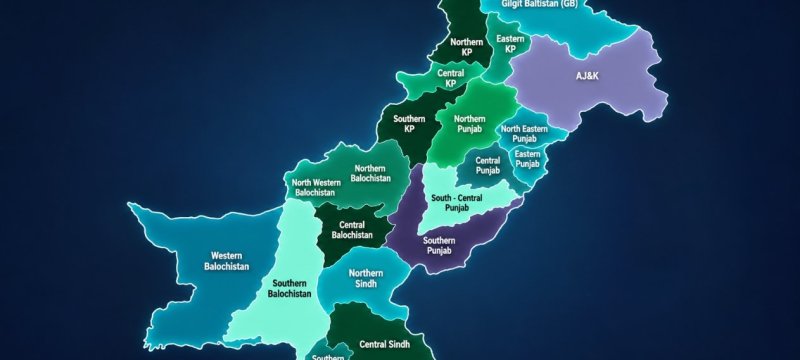
ISLAMABAD: Pakistan could consider a major administrative restructuring that would increase the number of provinces from four to 12, according to a reported proposal currently under discussion.
The proposed plan involves dividing the country’s existing provinces into smaller administrative units to improve governance, public service delivery and the distribution of development resources.
According to a report by Geo News, preliminary discussions also include the possibility of holding a nationwide referendum before moving towards the proposed 28th Constitutional Amendment.
Initial political and administrative steps could begin during the first quarter of 2027, while constitutional changes may be considered in the first half of the year.
However, the proposal has not received final government approval, and no official schedule for implementing the changes has been announced.
Under the reported restructuring plan, Punjab could be divided into four provinces, while Khyber Pakhtunkhwa and Balochistan would each have three. Sindh would be reorganised into two administrative provinces.
The proposed distribution would be as follows:
| Existing Province | Proposed Number of Provinces |
|---|---|
| Punjab | 4 |
| Khyber Pakhtunkhwa | 3 |
| Balochistan | 3 |
| Sindh | 2 |
| Total | 12 |
If implemented, the proposal would represent a significant change to Pakistan’s current administrative structure.
However, the names, geographical boundaries, provincial headquarters and administrative arrangements for the proposed units have not yet been finalised.
The reported plan is based on the argument that Pakistan’s existing provincial administrations face increasing difficulties managing large populations and geographically extensive territories.
Supporters of administrative decentralisation believe smaller provinces could make government institutions more accessible to citizens and improve the delivery of essential services.
Under such an arrangement, provincial administrations could potentially manage education, healthcare, infrastructure and development projects more efficiently.
Smaller administrative units could also help address regional concerns about the distribution of public funds and development opportunities.
Another important element of the reported proposal is the possibility of holding a nationwide referendum before introducing constitutional changes.
The referendum could provide an opportunity for citizens to express their views on the creation of additional provinces.
According to the reported discussions, seeking public opinion could help establish broader support for the proposed restructuring before lawmakers begin the formal constitutional process.
However, no referendum date, voting mechanism or official question has been announced.
A nationwide referendum would also not remove the constitutional requirements governing changes to provincial boundaries.
Under Article 239 of Pakistan’s Constitution, constitutional amendments must pass through the prescribed parliamentary process. Any amendment affecting the limits of a province must additionally receive approval from at least two-thirds of the total membership of that province’s provincial assembly.
This requirement means that establishing new provinces would involve substantial political negotiations and constitutional approval.
The reported timeline suggests that preliminary work could begin between January and March 2027.
Further discussions on the proposed 28th Constitutional Amendment could follow during the first six months of the year.
However, these dates remain tentative, and there is no confirmation that the amendment will formally be introduced within this period.
Creating additional provinces would also involve several administrative and financial challenges.
Authorities would need to determine how existing districts should be distributed, where new provincial capitals would be established and how government departments would be reorganised.
The division of financial resources, public-sector employees, infrastructure and administrative responsibilities would also require detailed planning.
Additional provincial assemblies, government offices and supporting institutions could involve significant public expenditure.
Political agreement would be another major challenge, as provincial boundaries are closely connected to regional identity, political representation and control over resources.
The proposal could therefore require extensive consultations with political parties, provincial governments and other relevant stakeholders.
For now, Pakistan continues to operate with four provinces: Punjab, Sindh, Khyber Pakhtunkhwa and Balochistan.
The reported plan to establish 12 provinces remains a preliminary proposal rather than an approved constitutional change.
In other news read more about: PML-N Agrees to New Punjab Provinces After 2029 Elections, Journalist Claims
Its future will depend on political consensus, public support and the completion of all constitutional requirements.